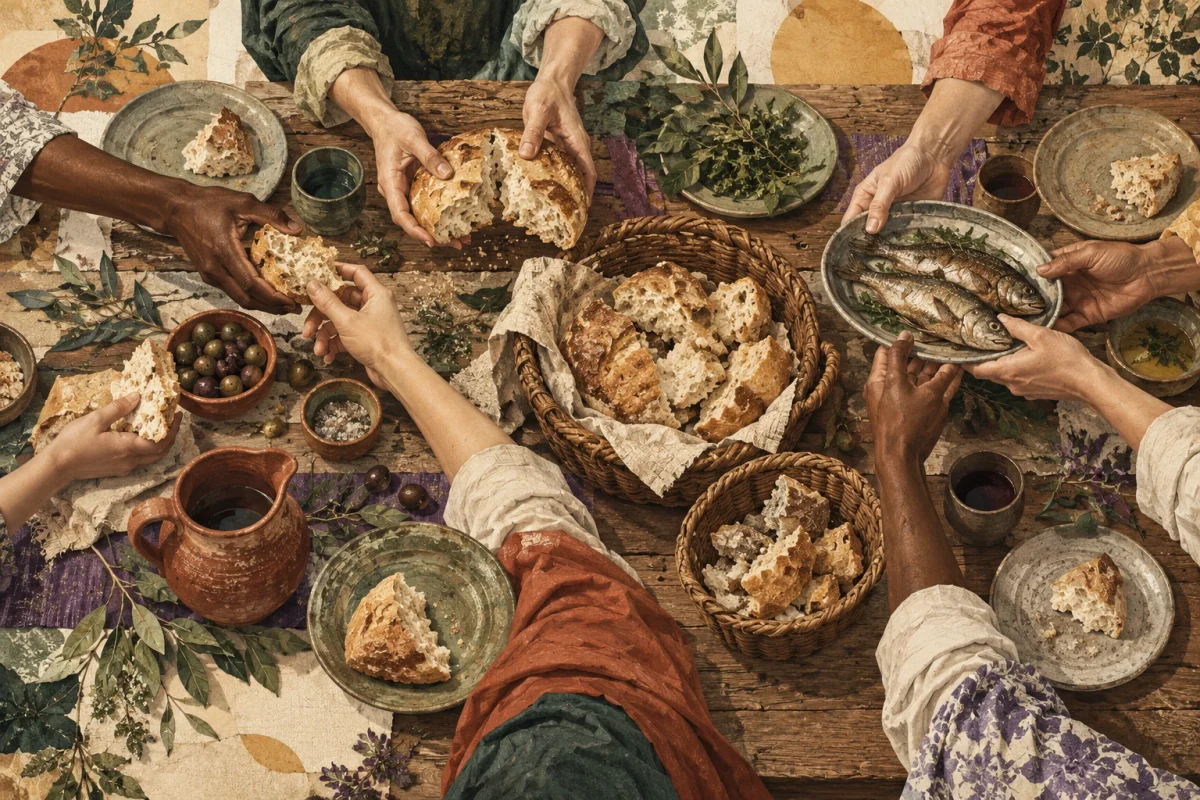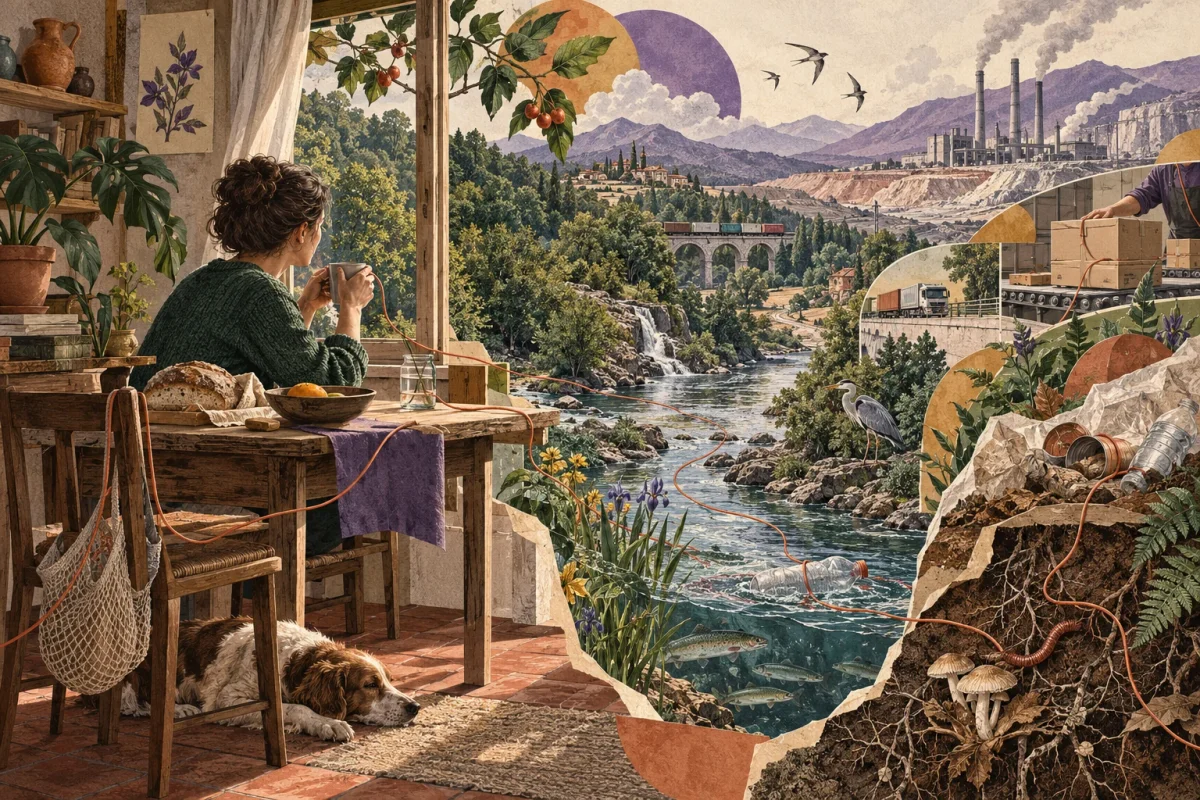
We can eat a meal without almost realizing it, as if the body were just a machine to supply. Or we can turn food into a continuous examination, measuring our purity at each bite. Between distraction and control there is a different space: observing what relationship we establish with what nourishes us.
The Tradition of the Three Guna offers a language for this investigation. It is not born as a modern table of nutrients. It is about the quality of nature, the ways of desire, and the conditions of knowledge. Its interest is lost if we reduce it to a rigid classification of people or to a list of morally superior foods.
Three qualities that go through the same life
Nella Bhagavadgītā, especially in chapter 14, sattva, rajas and tamas are presented as qualities of nature that condition being incarnated. Sattva is associated with brightness and clarity, rajas with activity and desire, tamas with darkness and inertia. Swami Krishnananda's comment insists on their interweaving: they are not three separate populations. Commentary on the Bhagavadgita, chapter 14.
Reading this map as a lens on experience changes the question. We do not ask who is definitely pure or impure. We observe when we become lucid, when the action turns into agitation, when rest slips into the inability to respond to life. The same person knows different situations.
Even apparent serenity deserves attention: it can be availability or protected indifference. The activity can be cure or escape from silence. No word spares us the work of recognizing the concrete context. Using a tradition to nail someone to a character means replacing a label by listening.
Food as a Relationship, Not a Ranking
Chapter 17 of the GītāIn verses 8-10, food preferences are linked to the three qualities. It describes the nutrition that satva appreciates through vitality, pleasure and support; it associates other preferences with excessive stimulation or deterioration. This is a religious and philosophical text, with historical interpretations: not a contemporary clinical experimentation. Chapter 17 in the Divine Life Society's commentary.
We can accommodate provocation without copying every prescription out of context. What happens if we always eat in urgency? What attention do we give to those who prepare the meal? Do we recognize satiety, gratitude, the need for companionship? These are questions about our way of living a gesture, not the diagnosis of the people sitting next to it.
Food brings with it economic availability, family memory, climate, work and culture. Spiritually judging a person through what he can afford to eat introduces a hierarchy that risks hiding these very conditions. Attention also begins by recognizing the real limits of each.
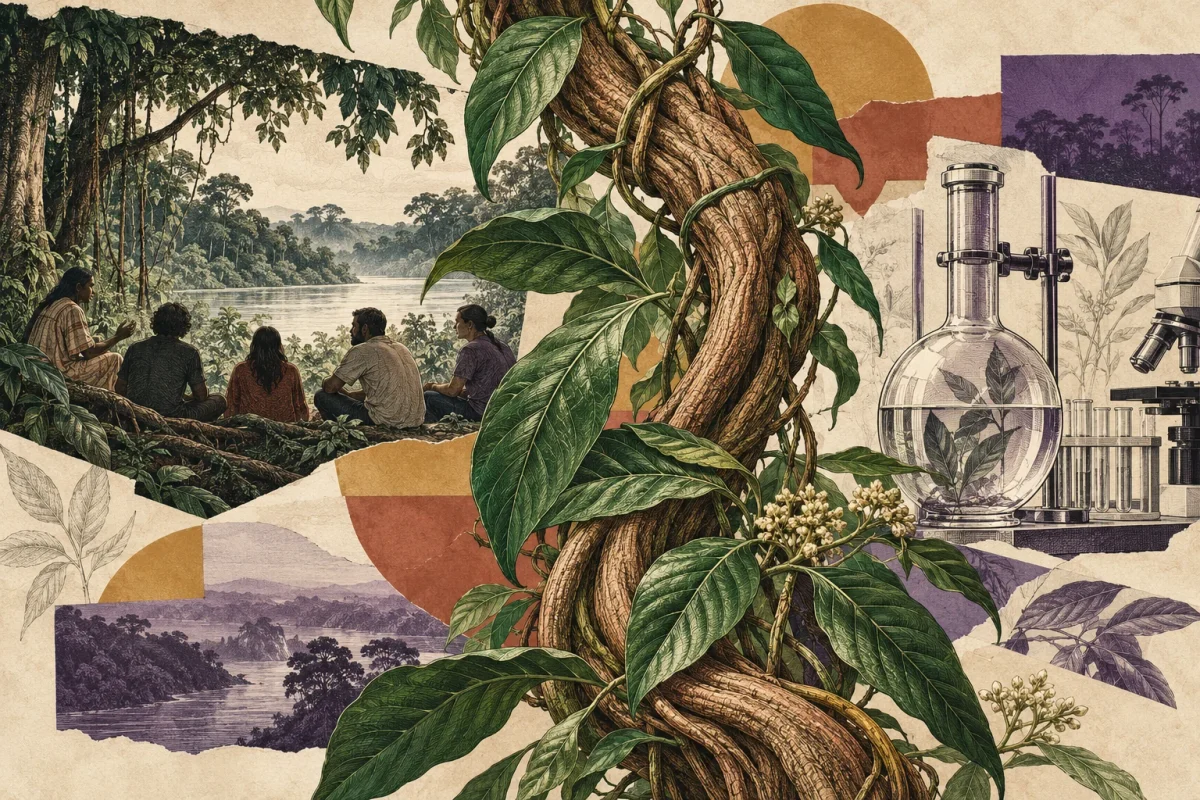
An Ancient Map Inside a Present Research
Ayurvedic medicine encompasses food and lifestyle traditions, but does not entirely coincide with the three guna doctrine. The NCCIH, an institute of the National Institutes of Health, recalls the limitedness of rigorous clinical evidence for many Ayurvedic applications. This distinction helps to keep the cultural value of a tradition separate and the verification of a treatment. NCCIH institutional framework.
The survey we propose is mainly about experience: can we recognize when we look for a break, a reward, an anesthesia or a meeting in the meal? Can we observe without turning every oscillation into a failure? It is not necessary to impose fasting, restrictions or purification programs to make these questions concrete.
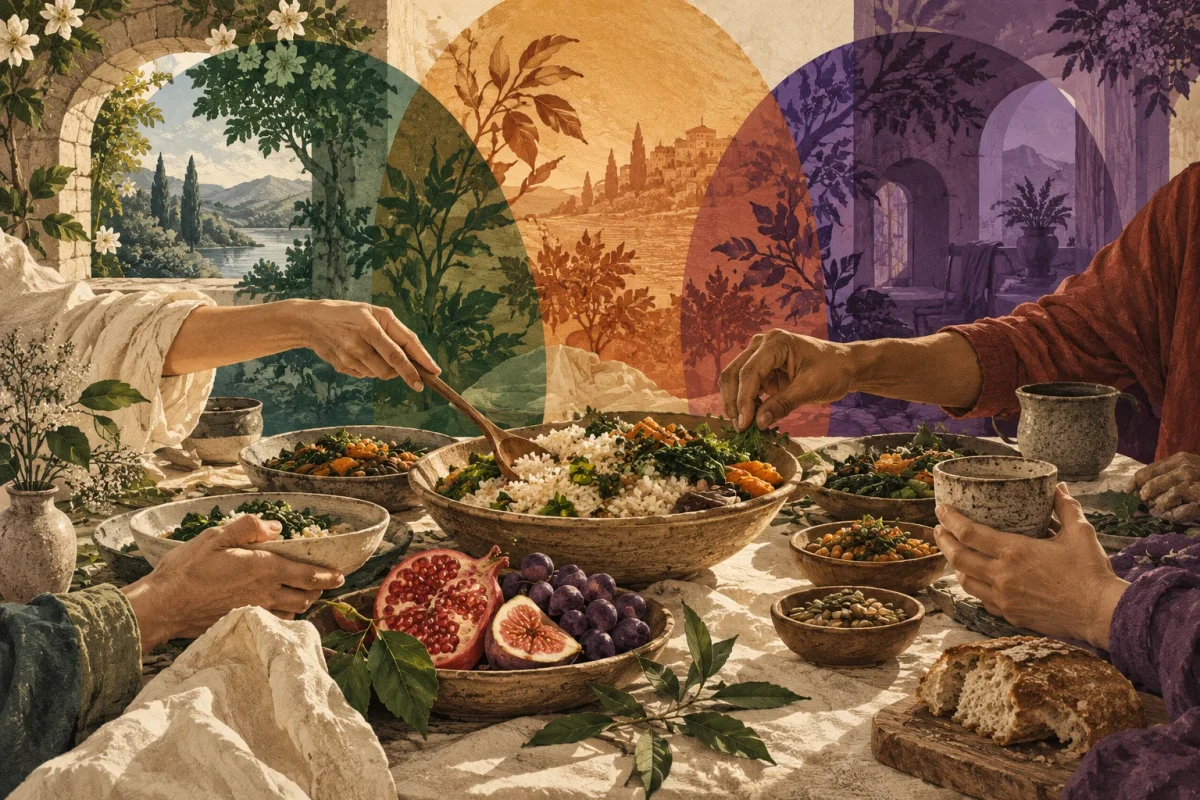
The presence at the table can include the care of those who eat differently, those who have specific health needs, those who go through a difficult relationship with food. A practice becomes hospitable when it does not demand that everyone enter the same pattern.
Sattva, rajas and tamas remain so words to question. They invite us to note the quality of what we feed, even in thoughts and relationships. Their exploratory value grows when they stop being a court and become an opportunity for attention.