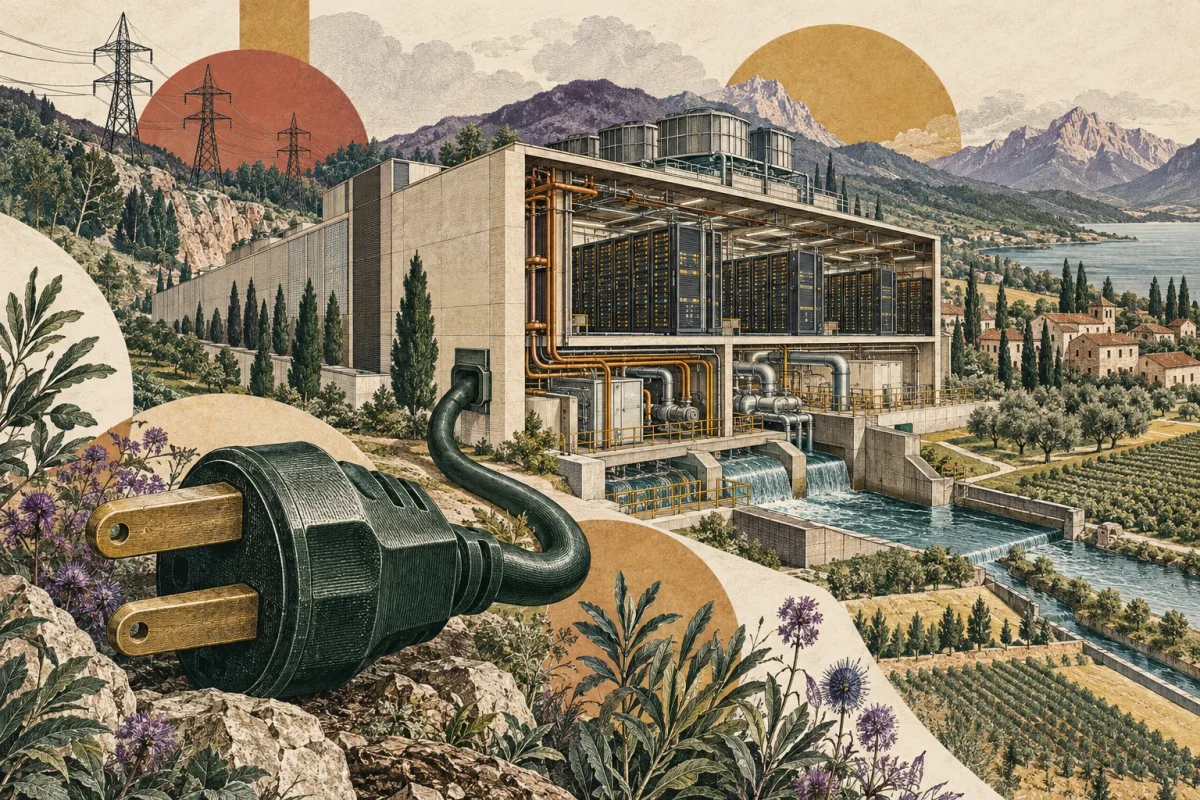
We can gently talk to trees and walk through the day without seeing the work, water, and matter that sustain our consumption. We can know many environmental statistics and treat those around us as an obstacle. The inner and outer ecology meet precisely in these inconsistencies, without one being able to replace the other.
Their relationship does not require proving that clean thinking cleans up a river. It asks to observe how perception, desire and collective organization orient what we do to the world. The quality of attention matters, but it also matters where the items we buy end up.
The mind within a net of consequences
The Collection Steps to an Ecology of Mind Gregory Bateson combines anthropology, learning, evolution, and knowledge. Among the essays listed in the University of Chicago Press edition are the relationship between conscious purpose and nature and the roots of the ecological crisis. It is a perspective that invites us to question the way we build the boundaries of problems. Bateson's Work.
We can use this question to read an ordinary choice. If we consider only the moment of purchase, an object appears isolated: price, utility, desire. If we widen our eyes, extraction, production, transport, repair and waste enter. We did not add another reality; we recognized relationships that the initial frame left out.
Attention also has its own frame. A nuisance can become just someone's fault or a signal of incompatible rhythms, spaces and demands. This does not erase personal responsibilities. It prevents too narrow an explanation from making us reproduce the problem while we believe we have solved it.
The planet is not a metaphor for our mood
The Global Resources Outlook 2024 UNEP and the International Resource Panel document that global resource extraction has tripled over five decades. The report analyzes pressures and possibilities of changing production and consumption. It's about material flows and collective decisions, not people's spiritual frequency. UNEP Report.
This concreteness protects the ecology from being transformed into an exclusively private matter. A citizen does not decide for himself a transport network or the repairable duration of all products. It may orient some of its choices, but the available possibilities are unevenly distributed. Public policy and economic organization remain decisive.
The distinction between needs and desires also requires delicacy. It is easy to call superfluous what does not belong to our life. More challenging is to observe how a market continually feeds the feeling of lack and how communities can create forms of well-being that are less dependent on accumulation.
A practice that links presence and responsibility
Inner ecology can begin by recognizing an impulse before it becomes an automatic gesture. Why do we want to replace something that works? Are we looking for utility, belonging, relief, recognition? The answer will not always be to give up. The difference lies in making the relationship we are building visible.
External ecology then calls for a follow-up: accessible repair, shared places, understandable product information, services that make different choices work. Without this passage, awareness risks becoming a measured luxury on the individual's ability to do everything on their own.
We can bring the same criterion into relationships. Listening does not mean absorbing every request; a habitable human environment also needs limits. Care is not unlimited self-consumption, just as the availability of nature is not an authorization for endless withdrawal.
The meeting point is a responsibility capable of seeing connections without dissolving differences. A forest is not a person, a person is not a resource to optimize, an environmental crisis is not solved by changing only language. However, we can learn to better name what we depend on. From that recognition, gestures and institutions that guard life become possible instead of taking it for granted.