A spirituality that loses the taste of life risks exchanging depth for severity. The immobile face becomes a credential, the renunciation a competition, the smile a suspect. Yet the relationship with the sacred can also pass through a shared table, the movement of the body, a party in which no one must exhibit their perfection.
The problem is not solved by declaring that all fun is liberation. There are cruel laughter, exclusionary conviviality and parties built to forget who is left out. The question is more demanding: which joy enlarges our ability to meet and which, instead, restricts it?
A table that questions boundaries
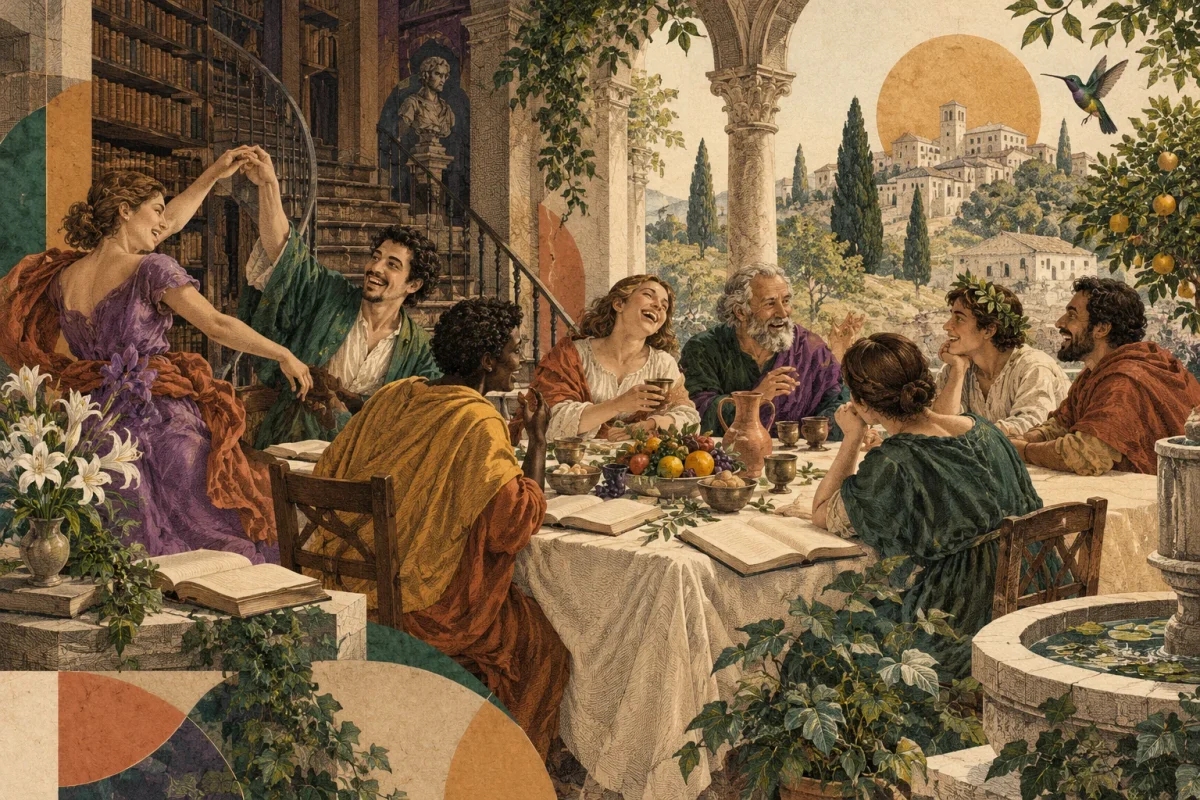
The Gospel of Luke keeps an eloquent controversy: in Luke 7:34 the Son of Man is accused of visiting people deemed uncomfortable and of eating and drinking with them. The literary scene shows how much conviviality can become a field of religious conflict. In John 2:1–11, the first sign of Jesus is placed during a wedding feast in Cana. These are precise textual references; they do not demonstrate every modern reconstruction of Jesus’ character. Luke 7, John 2.
We can read them as a provocation aimed at the present. Sitting together means accepting a time that we do not completely control: the pauses, the unexpected, the hospitality, the word of the other. Nutrition becomes a relationship when it ceases to be only an individual performance. Even a simple table can interrupt the ranking that separates those who deserve attention from those who should remain invisible.
This does not authorize turning wine into a spiritual obligation or ascribing to the texts dance scenes or laughter that those passages do not tell. Interpretative freedom grows when we recognize the boundary between what we read and what we imagine.
Laughter in a Forbidden Library
Nel Name of the rose The relationship between rice and authority becomes a great narrative machine. The novel stages the fear that the comedian may crack a truth administered through fear. At the center of the plot appears an imaginary second book of the Poetics of Aristotle dedicated to comedy: it is a device of fiction, not proof of the discovery of an ancient work. The Bompiani edition places the survey of William and Adso in an abbey in 1327. The work of Umberto Eco.
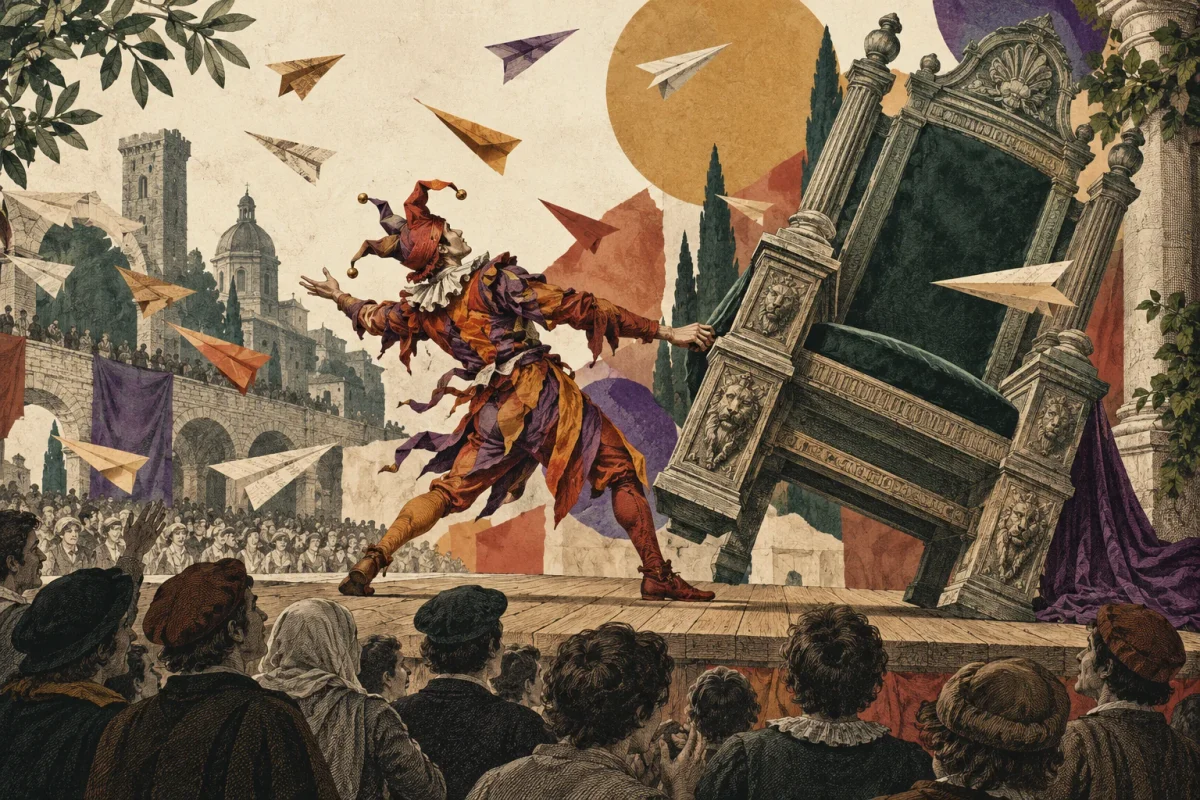
The strength of the question remains current: does a teaching endure being questioned even through irony? If every smile is treated as an offense, the relationship with the real risks turning into the defense of a position. Laughing at oneself can create a healthy distance from the character we play: the competent, the pure, the awakened, the one who has always understood before others.
One must, however, distinguish the irony it opens from the derision it humiliates. The criterion is not how bright a joke is, but what happens to the least protected person in the room. A community that laughs only at the weak keeps its rigidity intact.
A joy capable of remaining present
Dance and conviviality can be occasions of presence without becoming guaranteed techniques of elevation. We can inhabit the movement without judging the body, listen to a rhythm without having to immediately translate it into a theory, participate in a party without losing the right to stop. Even silence belongs to joy when it is not imposed.
The sacred, in this perspective, does not coincide with a tone of voice. It is about the quality of attention we bring to life. A rigorous discussion can be joyful; an impeccable ceremony can leave everyone alone. The sign to observe is the availability that arises after: more listening, less need to prevail, more space for those who do not share our words.
Taking existence seriously does not force us to stiffen it. We can guard pain without making it the only language of depth, and recognize a feast without asking it to erase suffering. A hospitable spirituality can support both: the tear that asks for companionship and the smile that gives breath back.