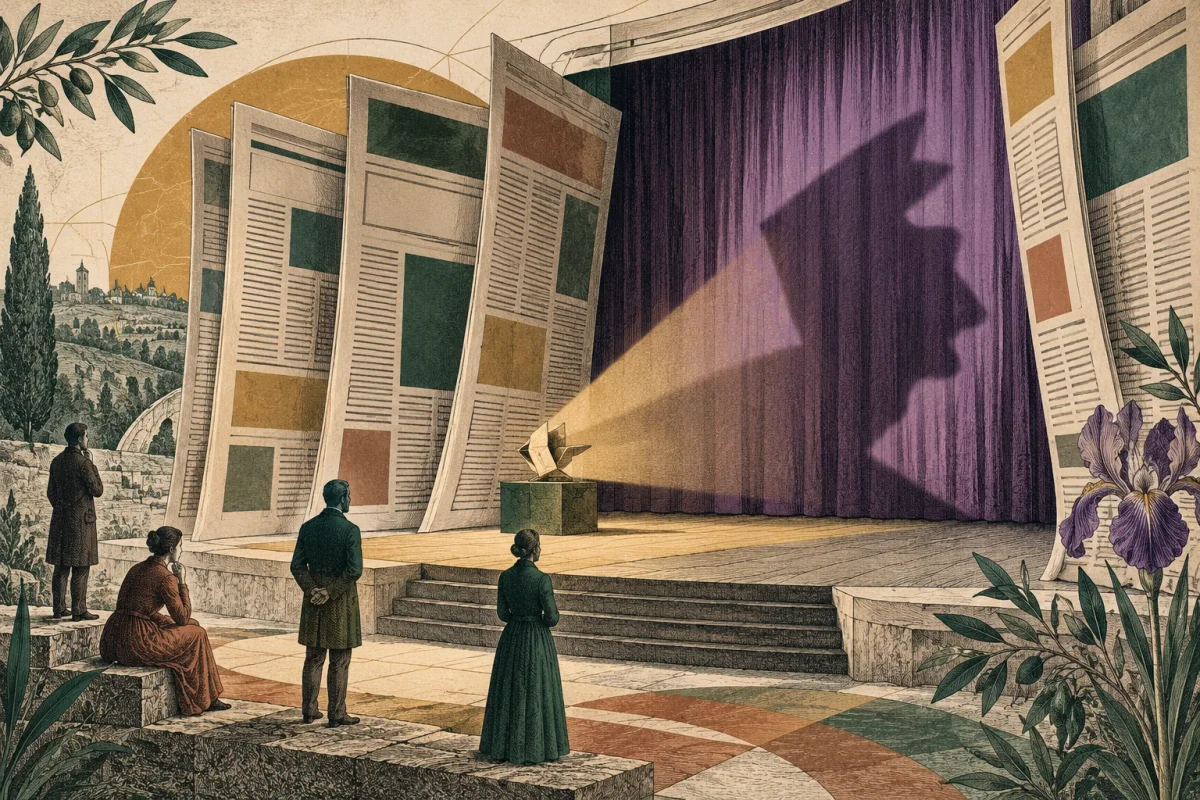
An image comes before the information that would allow one to understand it. A title invites to react, a sentence immediately assigns faults and belongings. In times of conflict the time between seeing and sharing can be reduced to a few seconds. It is in that space that a personal fear can become part of a collective mobilization.
Interrogating this passage means studying languages, interests and conditions of communication. It does not require assuming that every alarm is invented or that every mistake depends on a single director. It requires the ability to distinguish a documented danger from the way it is presented.
An emotion does not decide the truth
We can feel fear in the face of real news and relief in the face of fake news. Our inner state is important for understanding the reaction, but it does not replace examining the facts. Recognizing an emotion can help us prevent it from becoming the sole criterion by which we attribute credibility.
A research by Soroush Vosoughi, Deb Roy and Sinan Aral, published in Science in 2018, examined the Twitter spread of classified news through verification organizations. In the sample analyzed, fake news circulated more quickly and reached more people, with a marked difference for political news. The study is about that period and that platform, not every communication possible. Science, original research.
The result also invites us to observe our sharing habits. We can ask ourselves whether we are offering information or manifesting belonging; whether the message contains verifiable elements or just an invitation to take sides. These are questions that remain useful even when we sincerely share the proposed cause.
The language that ignites the group
William Brady and colleagues analyzed messages on three controversial political issues, noting an association between moral and emotional language and greater dissemination. Research shows a communicative dynamic; it does not prove that a particular opinion is false or that all users are manipulated in the same way. PNAS, study on moral contagion.
Words that immediately divide innocent and guilty can make any subsequent question difficult. In an ordinary conversation we may notice when asking for a source is interpreted as treason. The group then stops discussing only one event and begins to monitor the loyalty of the participants.
This risk can involve very different positions. To observe it we must allow ourselves the opportunity to recognize it even in the messages we feel closest. Autonomy requires a space in which a reason can be examined without immediately becoming proof of our identity.
Watching Conflict Without Feeding It
A practice of critical thinking can start with reconstruction: what event is documented, what parts remain uncertain, who proposes an explanation and on what elements? Date, place, context, and sequence help slow down the automatic association between image and conclusion.
On the level of consciousness we can add a different question: what produces in us the continuous consumption of alarm? This is a reflection on experience, not a diagnosis. It allows us to consider whether we are still seeking understanding or just confirmations capable of reactivating the same emotion.
Politics needs to name real dangers and responsibilities. The care of language serves to make them questionable and understandable, without transforming people and populations into abstract figures to fear. Peace-oriented information can hold firm questions about power and, together, reject the comfort of an enemy who explains everything.