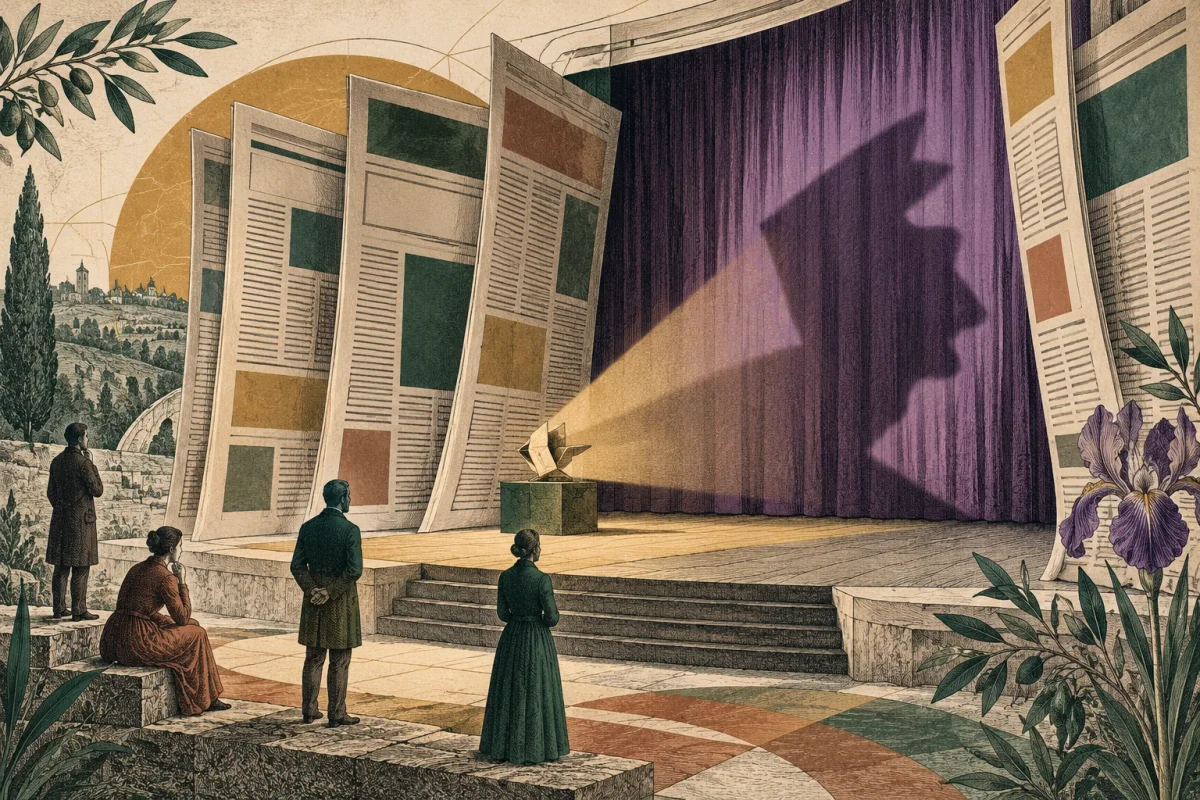
A title appears on the screen and the reaction comes before the article: we trust it because we recognize the warhead, or we reject it for the same reason. The name works as a shortcut. It may orient the choice, but it still leaves what has been documented to be read.
Political information requires attention capable of crossing this threshold. A newspaper has a history, a property, an editorial line, economic relationships and daily decisions. To evaluate it, you need questions that can find observable answers.
The right to speak and the conditions of listening
Article 21 of the Italian Constitution protects the manifestation of thought and the freedom of the press with respect to authorizations and censorship. The text, available on Senate website, also includes the possibility of making known the means of financing the periodic press through general rules.
Freedom of information therefore includes a public dimension that precedes sympathy for a single warhead. Protecting the possibility of expressing different positions allows citizens to confront a reality that no voice exhausts.
For those who read, this freedom also becomes concrete in access to sources. Does an article indicate the document you are leaving from? Distinguish a political statement from an assessment? Does it make clear what is still disputed? The form of the quote and the link to the full text change the reader's margin of autonomy.
Knowing Who Owns and Who Decides
European Regulation 2024/1083, known as the European Media Freedom Act, addresses editorial independence and transparency of ownership. Article 6 provides for accessible information about owners and measures relating to the independence of editorial decisions and conflicts of interest for news and current affairs providers. The text on EUR-Lex allows you to verify provisions and scope.
Knowing a proprietary setup helps to formulate precise questions. From that information does not automatically derive the explanation of each article. Further elements are needed to argue that a choice has been imposed: documents, verifiable testimony, decision sequences, and feedback.
The same applies to the labels of "government newspaper" or "newspaper against the government". They may make a political assessment, but an analysis must spell out its own criterion. We can examine which themes receive space, how the same conducts are presented by different subjects, which interlocutors are heard and which data remain out.
A circumscribed comparison is more instructive than a general suspicion. Choosing a story, collecting the articles of several newspapers, reconstructing their sources allows us to see real differences without attributing intentions that we cannot know.
Trust is renewed in practices
A reliable warhead can make mistakes. The way he makes them visible becomes part of his relationship with the public. A dated correction, an explanation of the amended passage and a willingness to examine documented objections offer concrete evidence of assessment.
The reader also participates in this report. Before sharing a title you can check the date, open the original source, look for the possible response of the person in question. It is not necessary to resolve any dispute alone: it is already useful to recognize which question remains open.
Media criticism loses strength when it repeats that everything would be manipulated. That formula subtracts differences right where it would be useful to observe them. Political and economic pressures are issues to be investigated through cases, responsibilities and evidence.
Trust can then become a watchful relationship. We support the freedom of those who inform and retain the power to ask them to account for their work. Each clear source makes this faculty a little more workable.