A threshold can be a life
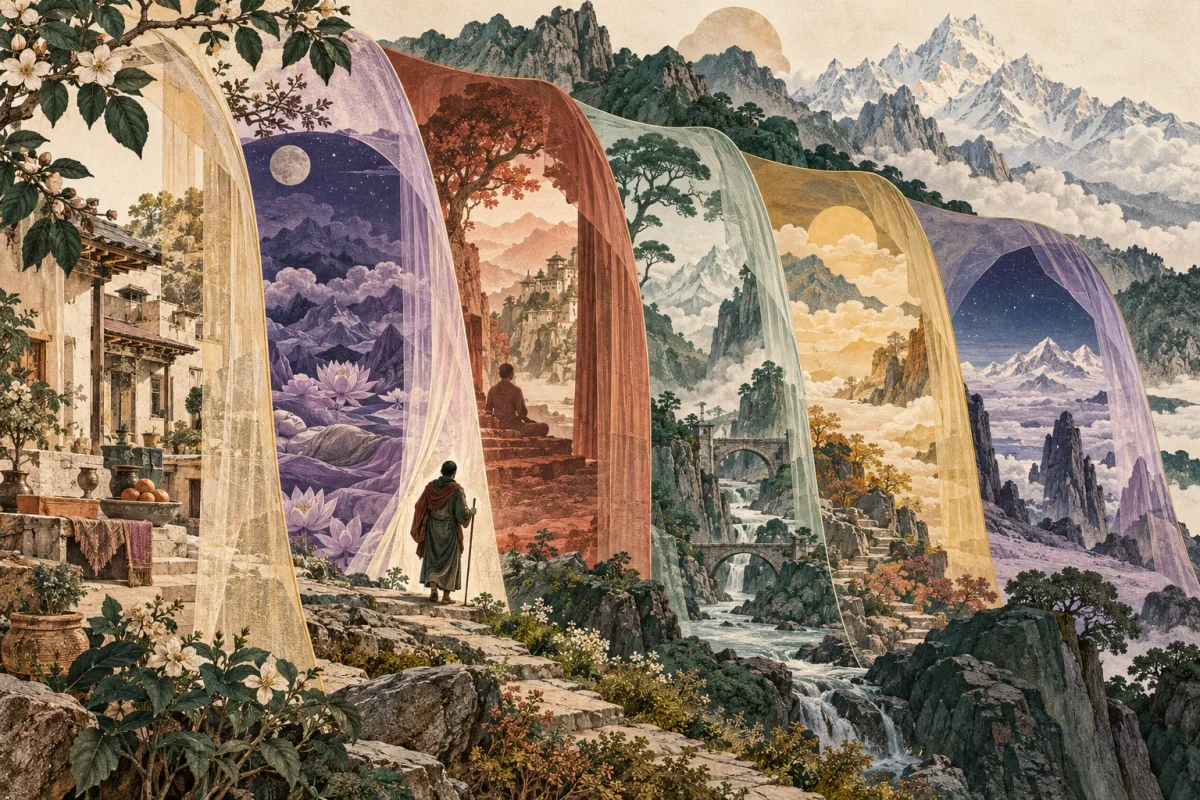
An intermediate state seems, at first glance, a time to be overcome. The first one is finished, the after is not yet stable: we wait to return to a recognizable condition. But what happens if what we consider stable is also looked at as a passage?
I Root Verses on the Six BardsThe Karma Lingpa cycle includes present life, dream, meditation, dying, dharmatā, and becoming. Death thus enters a wider field of experiences and transformations. the Tibetan text with translation of Lotsawa House allows you to recognize this joint.
The first surprise is about the present. The existence we are living in is not just a preparation for a future threshold: it is in turn being questioned as an occasion. Available time takes on value through what we do to you, listen to you, and understand.
The question can also be answered without adopting the entire Buddhist cosmology. What changes if we stop waiting for definitive stability to begin to be present? The transition would no longer be just a disruption of the path. It could become a feature of the path itself.
A text has more than one story
The name Tibetan Book of the Dead It often circulates as if it were pointing to a simple and immutable object. In reality, reading requires recognizing manuscripts, textual cycles, and editorial choices. The British Library catalogues, for example, the witness Tib I 228, attributed to Karma Lingpa, composed of four parts. La manuscript card describes its support, writing and provenance.
The contemporary edition translated by Gyurme Dorje, edited by Graham Coleman and Thupten Jinpa, presents the text in the relationship between living and dying, including dimensions of daily practice. These editorial data are verifiable in the Penguin edition page.
A story of transmission does not impoverish spiritual reading. It lets you know which voice we are meeting and which choices have made the words accessible. Translation is already a passage: terms and images move between worlds that do not organize experience in the same way.
The presence of a manuscript also requires precision. It documents the preservation and use of a tradition; it does not, by itself, constitute an empirical verification of the states described after death. Religious and scientific questions can meet through recognizable questions, avoiding confusing their respective objects.
Recognizing an Appearance Without Being Overwhelmed
In the verses, attention returns as an ability to recognize what appears. The relationship with fear, attachment and distraction goes through different states. Powerful images receive a spiritual orientation, within a language that invites a transformation of the way of perception.
A contemporary reading can question the relationship with one's reactions. When something scares us, how quickly does the first interpretation become the only available reality? Can we distinguish what has happened from the meaning we have assigned to it?
This comparison is an analogy, to be kept open. A difficult discussion does not coincide with the bard of dying; a pause between two works does not sum up a religious doctrine. The similarity may, however, suggest useful questions about how we go through a loss of references.
Even accompanying someone requires delicacy. A text that is meaningful to us does not have to occupy the whole space of the experience of others. Presence can consist of listening to what language the person desires and what silence allows them to remain themselves.
The Bardo thus offers a thought of the passages that also concerns the time lived. Between a form that dissolves and one that we still do not recognize, attention may seek guidance. The question remains: what chance are we neglecting while we wait for life to really begin?