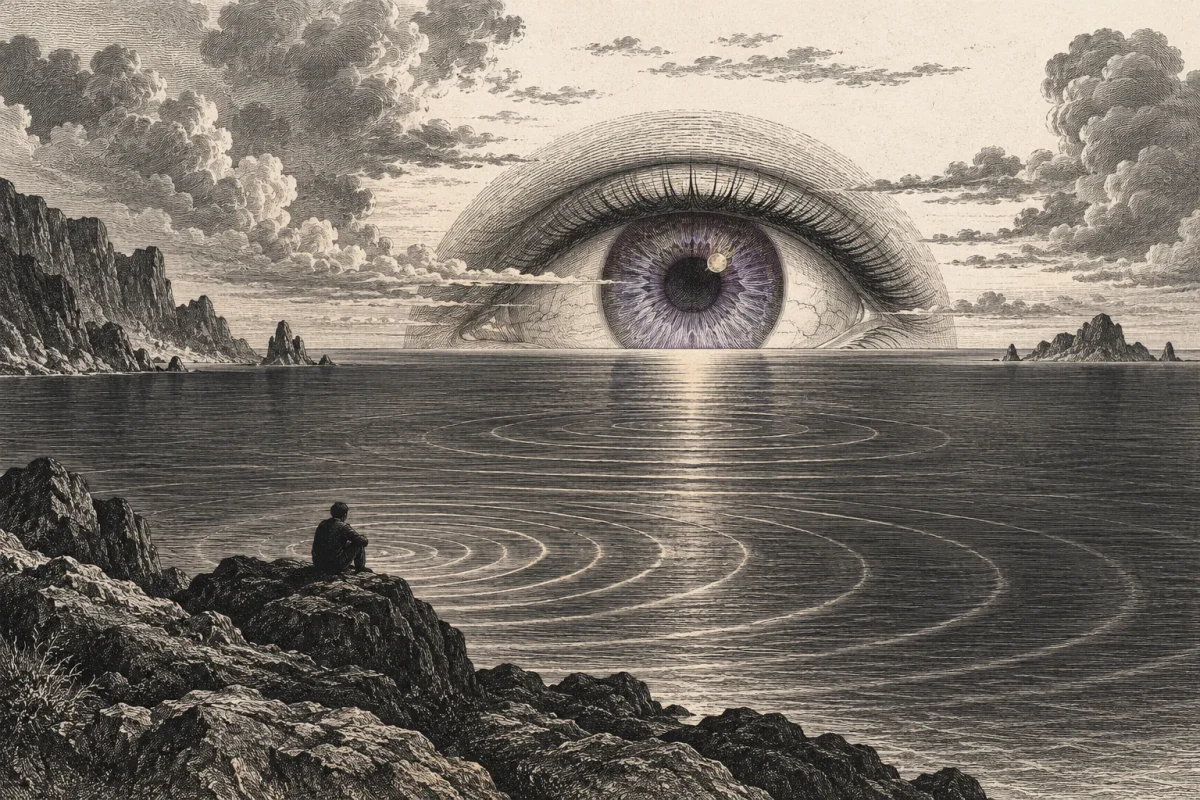
A light perceived as warm, a meeting with missing loved ones, the feeling of revising one's life: some survivors of a cardiac arrest recount experiences of this type. The Parnia Lab of NYU He presents them among the questions that motivate his research on conscience.
The story carries with it an intensity that deserves listening. The question of its origin requires a further path: under what conditions did it occur, when it was recalled, what interpretations were associated with it?
What is being told and measured
The AWARE II study, published in 2023, examined cognitive awareness and experiences during resuscitation through interviews, tests and monitoring. Out of 567 hospital cardiac arrests studied, 53 people survived; 28 completed interviews and 11 reported memories or perceptions indicative of conscious experiences. The original work exposes methods, categories and limits.
No one identified the visual image prepared for verification; one person identified the auditory stimulus. The authors also discuss electroencephalographic activity that emerged during resuscitation. These findings relate to precise clinical conditions and a limited group of people interviewed.
The point requires special attention: studying experiences associated with cardiac arrest and resuscitation is not the same as observing what happens after an irreversible death. Research can broaden the understanding of consciousness and memory without having solved the metaphysical question of survival.
For the reader, this means preserving together the seriousness of the testimony and the margin of uncertainty of its explanation.
Spiritual Maps of the Passage
Traditions have developed languages to accompany dying and question what might follow it. The text known as Tibetan Book of the Dead, in theedition translated by Gyurme Dorje, presents a religious vision of the passage, the conditions of consciousness and liberation.
Entering that work requires recognizing its context and the specificity of its teachings. A similarity between images of light is not enough to make a contemporary clinical account and a Buddhist cosmology identical.
We can compare languages by following circumscribed questions. What meaning does recognition have? What is meant by illusion? What role does preparation play during life? The answers belong to thought structures that deserve to be read in their entirety.
A person can find a spiritual orientation in these maps. His experience remains tellable even when it does not become a valid demonstration for everyone.
The Reincarnation Hypothesis as a Bond
Another reading imagines the return to new lives as a cycle from which to free oneself. In the most radical variants, lights, presences or calls after death could hold back consciousness; discernment would consist in recognizing them and choosing to pass them. The theme of the reincarnation trap appears explicitly in the material published on David Icke's website.
This page documents the presence of the theme in the esoteric debate. It does not verify the existence of the mechanism or prove that any variant of it comes from the same sources. Even the attribution of individual passages to Blavatsky or Tibetan traditions requires precise textual references.
The question can be addressed as cosmology: what image of the world does freedom propose, as it describes it, what relationship does it establish between fear and knowledge? These are matters to be discussed without presenting the account as an established instruction for dying.
Finally, the relationship with the witness remains. Listening to a light told means recognizing a human experience and gently asking what has changed in life. The investigation can continue without appropriating his response too soon.