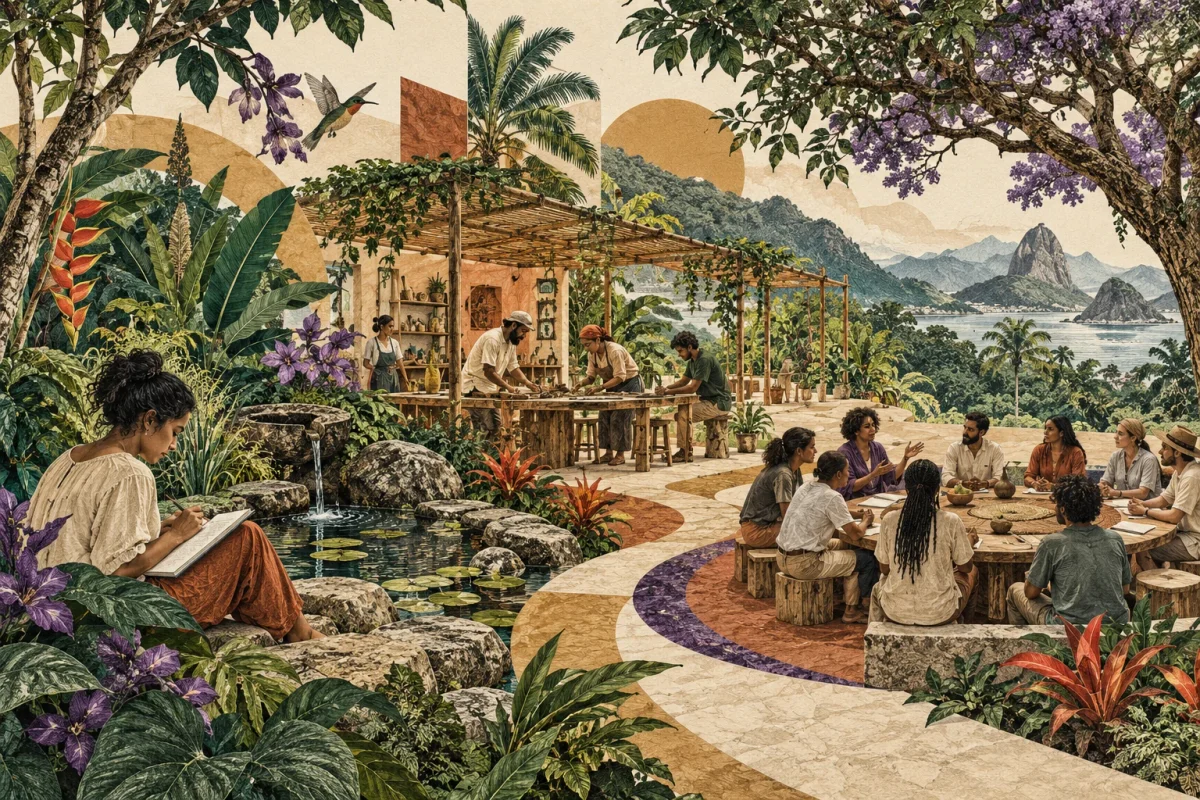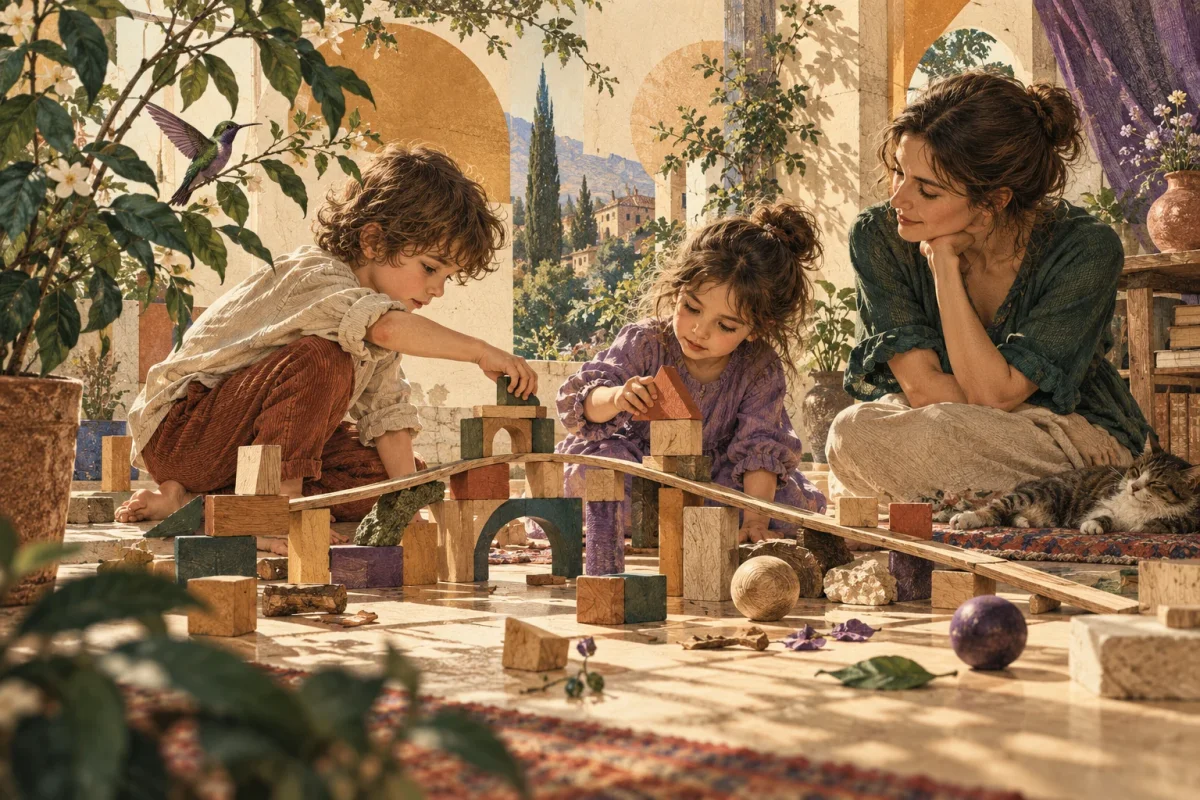
A child builds a rule for a game, then changes it because someone has been left out. In that gesture we find imagination, relationship with others and the possibility of correction. If we only observe how quickly he learns an expected response, we risk not seeing what he is learning to do with his own experience.
Educating to consciousness can start with this attention: recognizing those who grow up as a presence capable of questions and meanings. The spiritual perspective finds here a concrete form, in respect for the other and in the willingness of the adult not to occupy the whole space immediately.
The game produces real questions
The Learning through Play report, published by UNICEF and LEGO Foundation in 2018, presents the game as an important part of a child-centered education. It connects exploration, imagination, interaction and learning, recalling the need to adapt environments to contexts. It does not propose a single activity capable of achieving the same result for everyone. UNICEF, Learning through Play.
We can also read a game as a place where knowledge is tried. A construction falls, a story does not convince, a companion proposes an alternative. The child encounters consequences and possibilities without always having an explanation already concluded.
The adult can accompany this experience by asking questions that remain open: what happened, what part would you like to change, how can we involve another? They are proposals for a report, not a formula that guarantees special development. Their value can be observed in the freedom with which the child takes part in the activity.
Listening involves a responsibility
The Convention on the Rights of the Child recognises in Article 12 the possibility of freely expressing one's opinion in matters concerning the child, with consideration for age and maturity. Article 31 recognises the right to rest, play and cultural and artistic participation. Convention, full text.
These rights offer a precise orientation: the voice of the child must be able to have an effect in the relationship. Listening to a preference and then always ignoring it can turn participation into an empty scene. Instead, we can explain a decision, distinguish what is possible to change, and recognize when a proposal improves the common context.
Even silence requires respect. Not every experience must be told immediately and not every feeling must immediately find a word. A drawing, movement, or way back to a game can open a conversation without forcing an exposure.
Presence is Learned Together
A pedagogy of awareness also concerns the adult. We may wonder what we do when a child interrupts an explanation with unexpected observation. Do we listen to it as a contribution or just as an obstacle to the program? The answer makes visible what idea of learning we are practicing.
Nature, art and everyday life offer opportunities to observe without turning everything into performance. Watching an insect, inventing a sound or discussing a small conflict can become ways of knowing differences and limits. The time spent does not necessarily have to produce an object to show.
We can also guard in this experience the sense of wonder. An unanswered question is not a flaw to hide; it may be the beginning of a common search. Consciousness education gains consistency when it allows the child to feel present and the adult to continue learning, within a relationship that recognizes both the possibility of change.