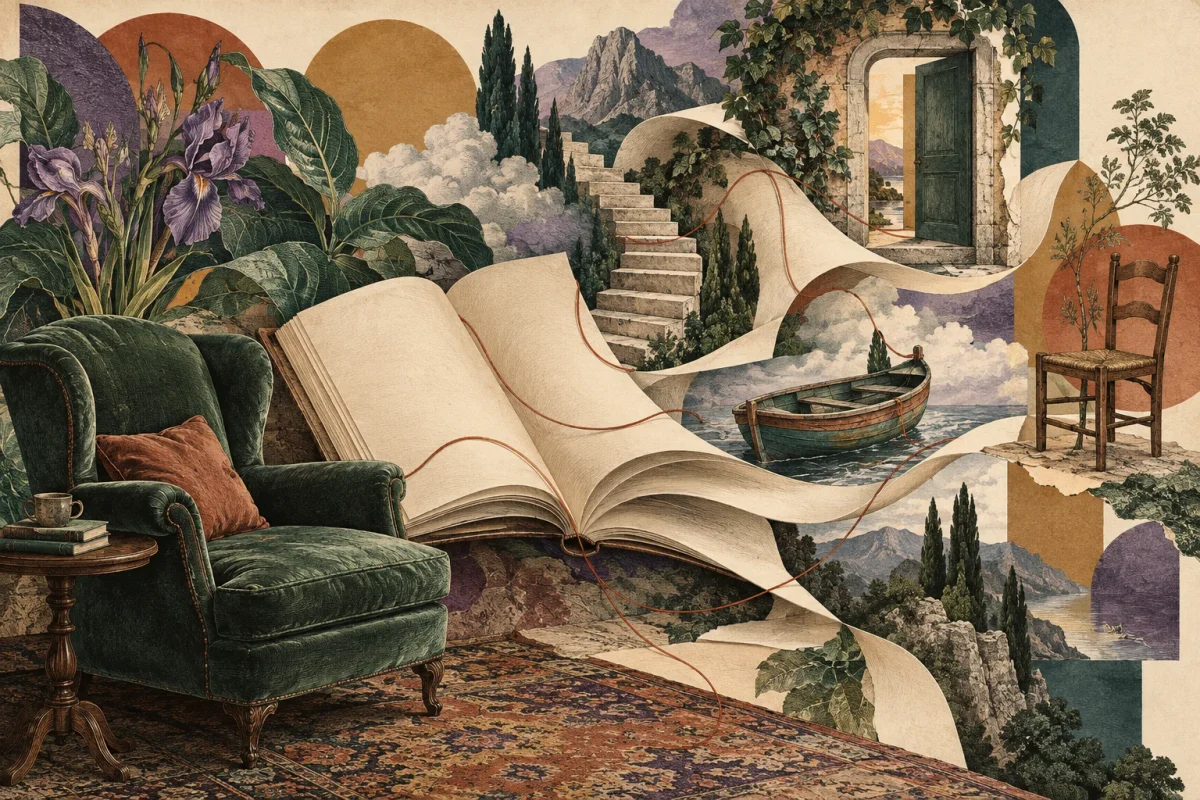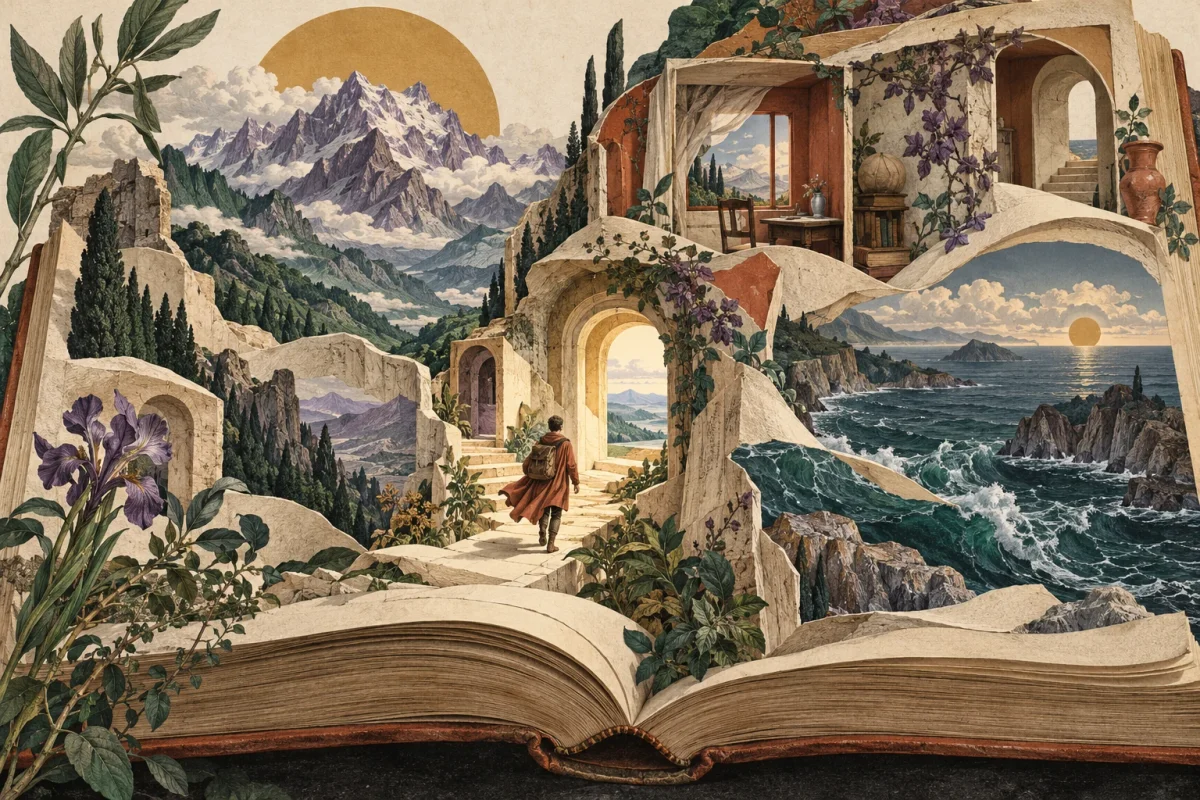
We can return from a journey with hundreds of images and notice, long after, that we don't know what really touched us. The landscape has been recorded; our encounter with that landscape has remained pending. A page of the Confessions puts the finger in this distance. Augustine approaches the wonder of mountains, seas, rivers and stars to the lack of attention paid to ourselves. But his reasoning continues beyond the phrase that has become aphorism.
The landscape we bring in
Nel book X, chapter 8, paragraph 15, the list of natural quantities belongs to an exploration of memory. The problem is surprising: how can we evoke immense things without having them materially within us? Augustine distinguishes things from restrained images, recognizing that he can also speak of an ocean known through the story. The self therefore does not appear as an empty room to be filled with experiences, but as a depth already difficult to understand.
Reducing this step to an invitation to travel less would take away from him the most fruitful question. The sea remains wonderful; astonishment extends to the possibility of remembering it. Looking inward means questioning the presence of the world in our experience, not declaring irrelevant what happens outside.
For those who today photograph, write down, archive, this distinction is concrete. A folder retains accessible images; no folder coincides with the meaning assumed by those images in our lives. We can find a file perfectly and no longer recognize the person who had chosen it.
Remembering does not mean owning
Nella Letter 7 to Nebridius, Augustine introduces a subtle difference: sometimes we remember something that is no longer there; at other times we remember what continues to exist, while we are the ones who have left. The example distinguishes a person's death from being removed from a city. Memory therefore unites absence, permanence and change of our position.
It is a useful distinction even when memory seems like definitive proof. The childhood neighborhood may still be there, while the relationships that made it home have changed. A person can be present and no longer occupy the place he had in our story. Asking what we remember then includes a second question: from what distance are we looking at it?
The inner journey becomes thick when it admits these differences. It may contain gratitude and loss, familiarity, and extraneousness. The past must not become a court in which every experience receives a final judgment. Returning to it can serve to recognize the way we have built a continuity, and also what that construction has left out.
A depth that does not end in the self
Confessions are a search for God. Treating them as a contemporary handbook of well-being would erase the speaker orienting the text. Their interiority does not coincide with self-sufficiency: the person seeks a truth that concerns him without considering himself entirely transparent to himself.
This distance may also affect those who do not share the faith of the author. In a culture that continually invites us to define ourselves, recognizing an area of non-knowledge changes the weight of words. To say that a story has transformed us may be the beginning of an investigation, rather than the conclusion ready to be exposed to others.
A reading exercise consists of taking a single travel picture and distinguishing three things: what it shows, what we remember having experienced, what we are looking for today. Answers can diverge. Photography does not lie for this; it simply does not contain the entire encounter.
The value of returning to oneself also lies in not making a revelation mandatory. Sometimes a contradiction emerges, a forgotten detail, a still unnamed question. The landscape remains outside of us and returns to being visible. Inside, meanwhile, we can see that our gaze has a story.