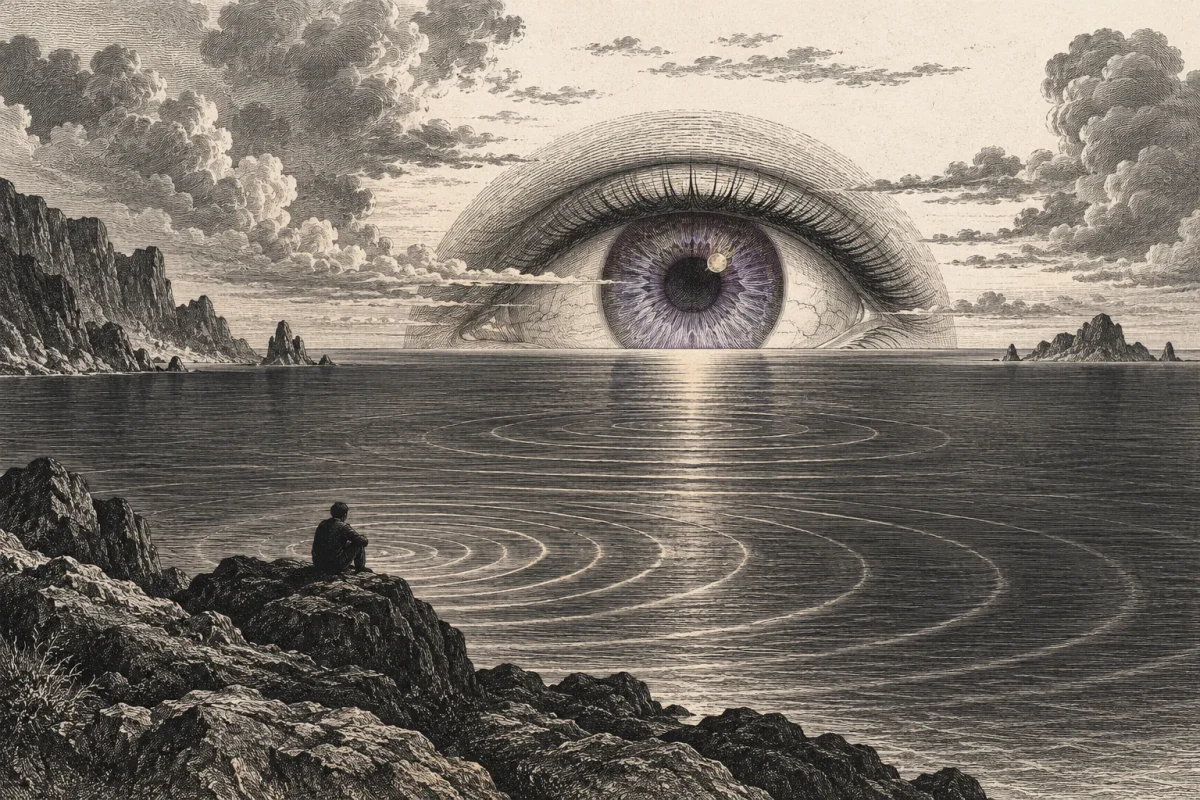
An elongated object appears in a dream and someone has the explanation ready. A name gets wrong and a joke immediately reveals the supposed hidden desire. Freud's popularity has also produced this shortcut: images and words become clues to be translated with a fixed code. But reading works opens up a more complex problem, in which interpretation depends on a person's associations and context.
The dream does not coincide with what we tell
NelDream InterpretationFreud distinguishes manifest content from the thoughts that analysis seeks to reconstruct. In its model, condensation and displacement contribute to the transformation that makes the dream together familiar and strange. A figure can pick up different traits; a seemingly marginal detail can take on a disproportionate prominence.
The method is therefore not exhausted in the combination of a thing and a meaning. The dreamer's associations play a decisive role. This does not erase the presence, in the work, of recurring symbols and sexual interpretations; however, it prevents the theory from being presented as a simple universal table.
The text documents a historical proposal on psychic activity. Its cultural influence does not automatically prove every explanation it contains. We can recognize the change in gaze produced by psychoanalysis without using it as an authorization to pronounce diagnoses about the lives of others.
The editorial question then becomes concrete: who has the power to establish what an experience means? The meaning imposed from the outside can take away the very voice of the person you wanted to help understand.
The word that stumbles
Nella Psychopathology of daily life, the field of inquiry includes forgotten names, misreading and word exchanges. Freud seeks relationships between these episodes and thoughts that do not openly present themselves to consciousness. The focus shifts to what, in an orderly narrative of ourselves, would seem only a disturbance.
Hence a fertile possibility arises: to listen also to the way in which a sentence is constructed, hesitates and changes direction. A risk also arises, when every mistake is treated as an involuntary confession. The fact that a theory attributes meaning to lapsus does not follow that a single exchange of name reveals with certainty a secret intention.
Let's imagine a discussion in which a person uses the wrong name for the colleague. Possible explanations include familiarity, sound similarity, haste, tension, and relationship history. This list does not solve the case; it shows why a joke can be as quick as it is unfair.
Interpretive prudence does not make language lacking in depth. It gives him the chance to have more causes and to be clarified through other words, rather than closed by a verdict.
A listen that returns the question
There is a difference between proposing a reading and winning the last word about someone. The first can open a conversation; the second can turn any answer into a confirmation. If dissent is always considered a resistance that proves interpretation, it no longer remains an effective way of discussing it.
A respectful comparison can begin with small descriptions. Which detail of the dream remains more vivid? Which association appears first? What sentence do we wish to correct? These are questions that do not require immediate adoption of a theory of the unconscious.
Even an editorial staff should distinguish between story, interpretation and general statement. A personal story can be meaningful without becoming the test of a psychic law; a metaphor can illuminate an experience without explaining each person. Publishing a dream is not the same as publishing a medical record, and intimacy requires consent.
The most useful cultural lesson of this reading is about time. An image can be questioned before it is classified. The word that escapes may call for attention before being used against the one who uttered it. Between the fact and the explanation remains a space in which we can still listen.