Because to start is not to continue
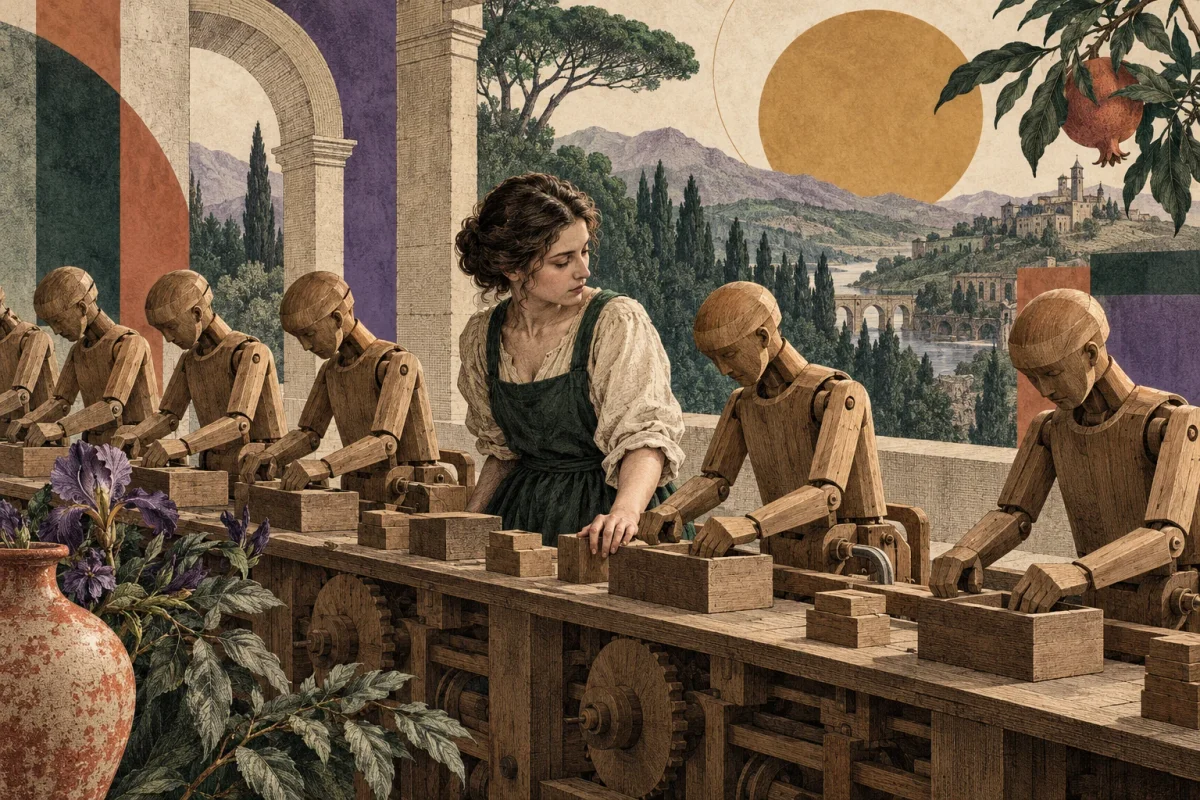
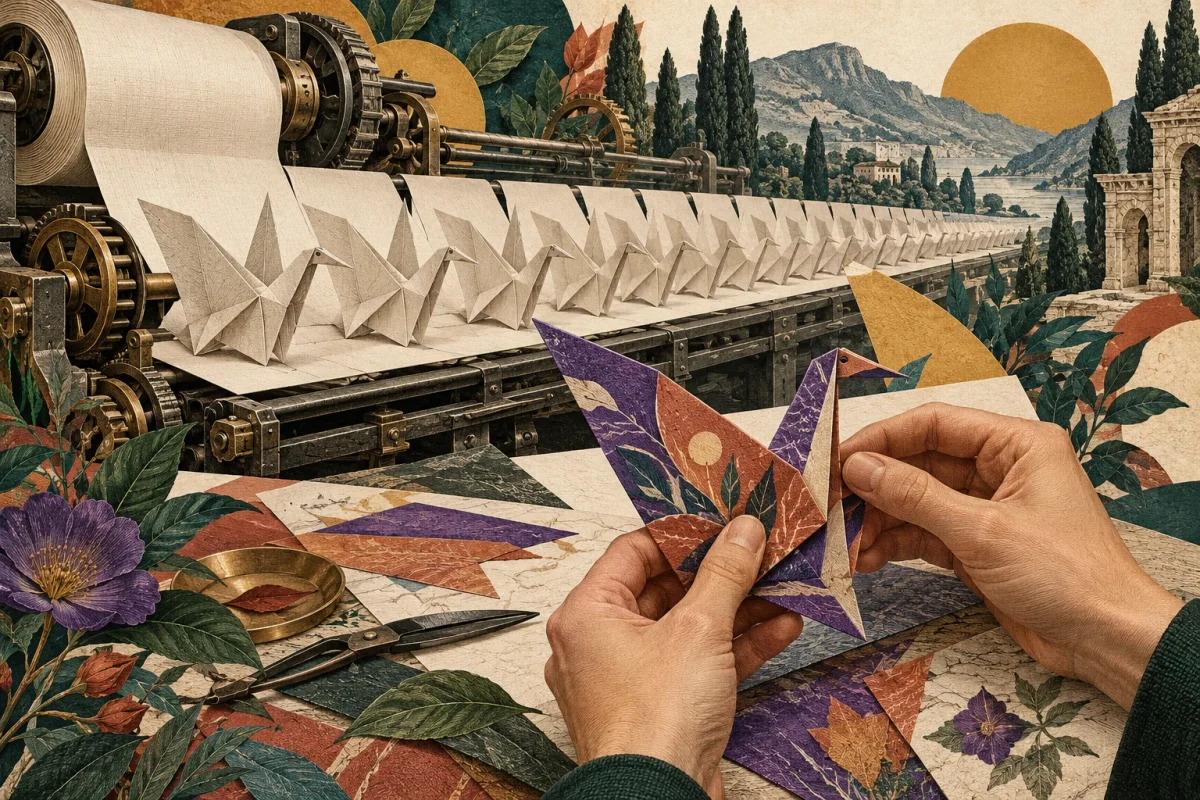
We decide to devote time to research. At first everything seems available: the reason is clear, the work promises a direction. After a few weeks we continue to do many things around the project, but we meet less and less the question that had generated it. The activity remains; its orientation has changed.
The problem goes through the description of the law of the eighth in In Search of the Miraculous. Ouspensky exposes the teaching Gurdjieff received through a musical analogy: the development of a process meets intervals in which a further contribution is needed. Without such input, the trajectory may deviate while giving the impression of continuing. The model is presented in theprimary work.
It is an esoteric cosmology. The relationship between notes and processes does not entitle one to treat it as a proven physical law. His philosophical interest emerges when he helps us to ask a circumscribed question: where, in a concrete activity, does inertia stop supporting the initial intention?
The delicate spot can be unspectacular. The group begins to defend its image; the reader accumulates books without studying them anymore; a practice becomes the way to feel already arrived. Change of direction often hides within behaviors that seem consistent with the project.
What is added
In the chapter dedicated to inner processes, Ouspensky links the first conscious shock to the reception of impressions and self-remembering. The person participates in the act of perceiving by recognizing himself present. The lexicon of the work describes transformations through symbolic substances and values, to be read in the specific framework of teaching.
A useful distinction also appears in Psychological Commentaries by Maurice Nicoll. In the text dated April 1, 1944, the change in vision is described as a shock compared to the usual way of taking life. It can mature slowly, through work on ideas, as shown by the second volume of the work.
The word thus loses the obligation of sudden violence. A further contribution may be a question that we previously could not formulate, an inconvenient response, the return to a neglected source. Its value depends on what makes it possible to observe.
Let's think of an editorial project that wants to foster autonomous thinking. If any criticism is interpreted as misunderstanding, the daily form contradicts the purpose. A useful intervention could be to actually make dissent workable, observing what happens when it comes. The process receives an element capable of changing its direction.
Recognize interval without fabricating a crisis
The idea of shock also contains a risk: someone might attribute the right to destabilize others for their own good. But causing discomfort does not prove to have understood a process, nor does it confer authority on the conscience of others. Experience must also be able to be discussed by those who receive it.
The most interesting criterion concerns the ability to act after the interruption. Do we see a first invisible alternative? Can we better describe what was happening? Do we have a better choice? These questions distinguish an openness from a simple dependence on the bewilderer.
The moment matters too. An effective gesture in one situation may be useless in another. Repeating it automatically turns it into a new habit, just as it claims to break the previous ones. Attention to interval requires sensitivity to the concrete history of the process.
Not every fatigue means deviation. Sometimes it takes rest, sometimes a more realistic goal, sometimes recognizing that desire has changed. Inner reading becomes more precise when it leaves access to simple explanations.
The additional shock may then remain a question about the passage: what contribution is missing because what we started preserves life? The response should not resemble the initial impulse. It can be the gesture that finally makes us aware of the road we are on.