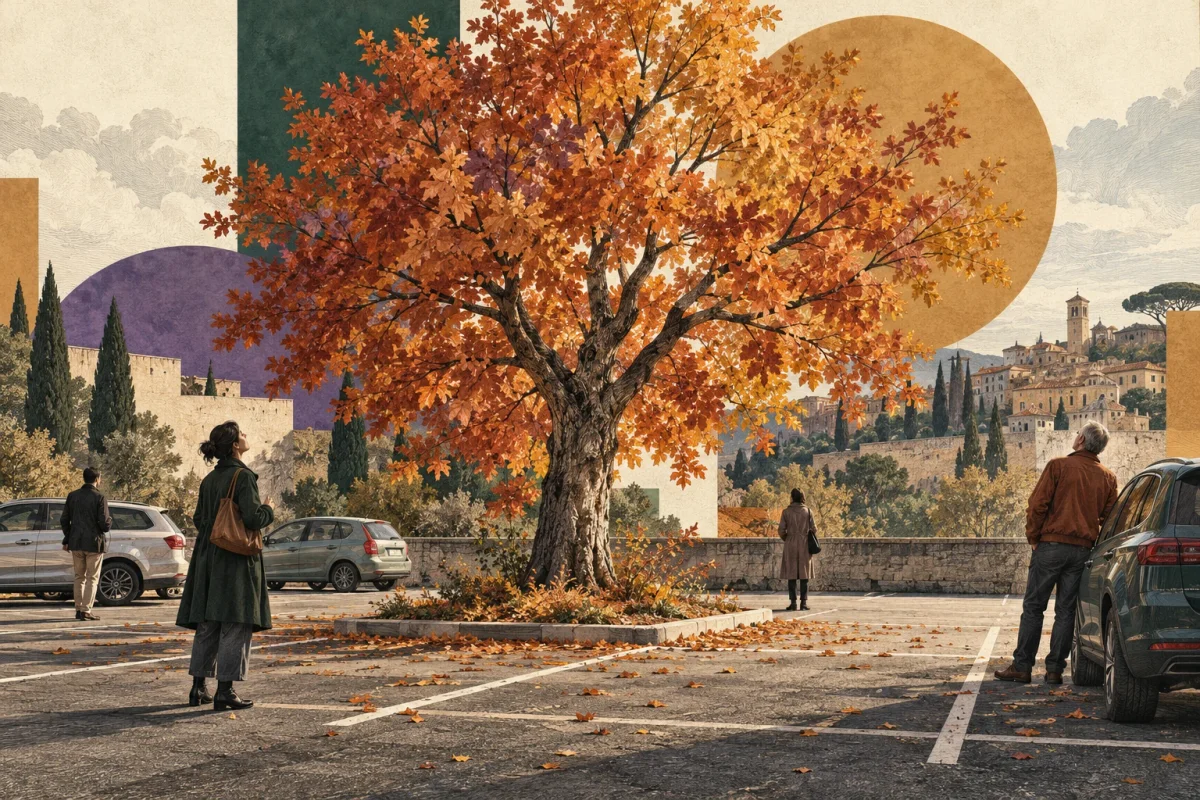
Cars arrive, someone looks for a cart, a door closes. At the edge of the parking lot a tree has gold-colored leaves. Imagine one person stopping, then another. The space destined for the passage becomes a small audience. In the end, a round of applause begins, addressed to the beauty that was already there.
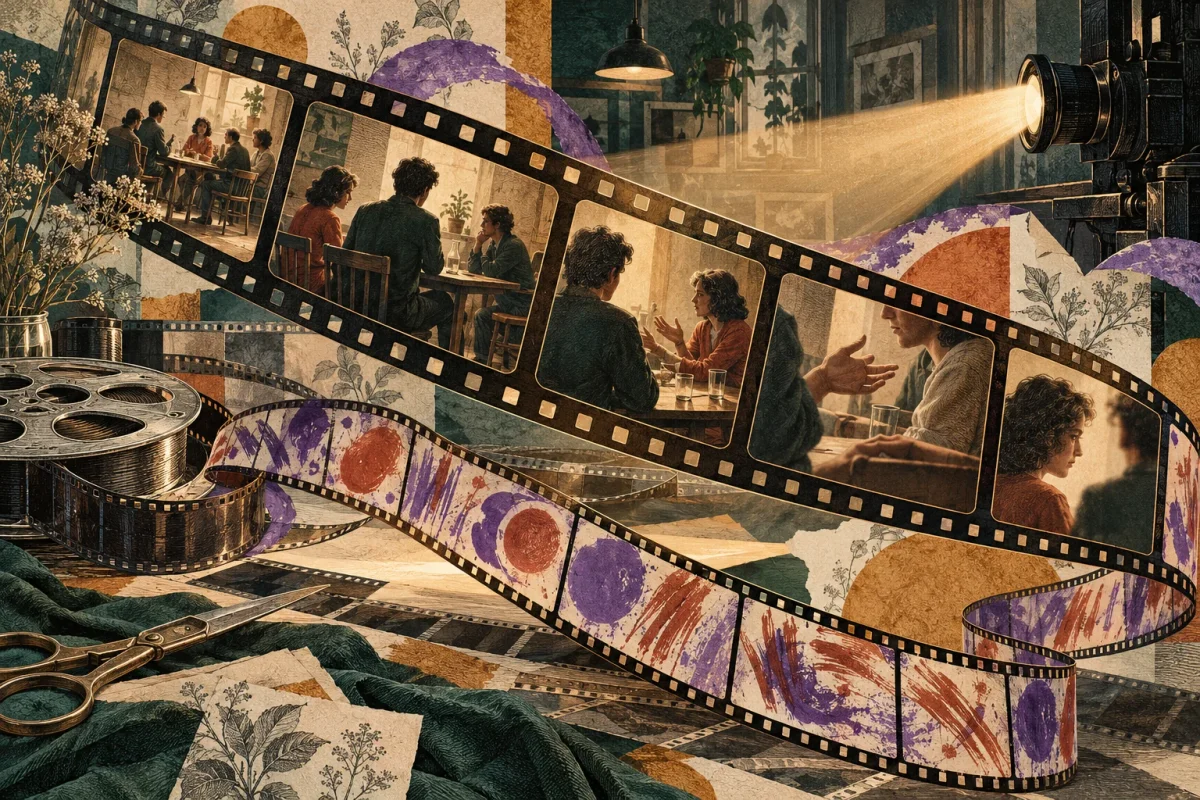
This is a fictional scene, a proposal for a possible film. His interest lies in the change of attention he sets in motion. Everything necessary is present before the applause: light, leaves, bodies, time. Change the willingness to meet him.
The landscape we cross
A parking lot organizes fairly precise gestures: arrive, find a place, get out, reach a destination. A tree can appear in our field of vision as a shadow, obstacle, reference to find the car. The use we make of the place establishes a practical hierarchy between things.
The imagined scene interrupts that hierarchy for a few moments. The detail that accompanied a task becomes the object of the meeting. We can ask ourselves how much of the everyday landscape is waiting for this different arrangement: a facade, a stream, a person who works in front of us.
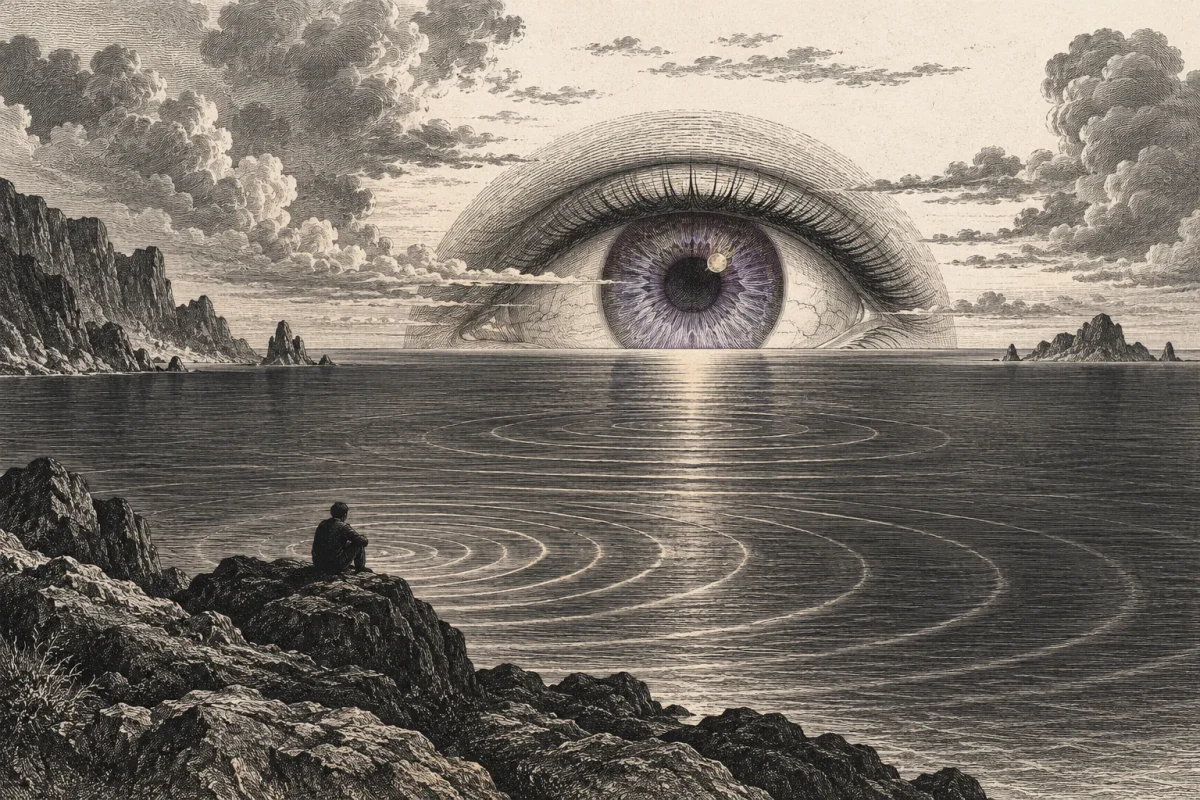
William James dedicated a chapter of the Principles of Psychology, in 1890, to attention and its forms. The text preserved by York University distinguishes, among other things, sensory and intellectual attention, spontaneous capture and voluntary effort. It is a document in the history of psychology that helps formulate the question: what do we select, and through what interests?
Applying that question to a walk requires few tools. We can observe what immediately calls our gaze and what we encounter only by returning to our steps. The comparison makes visible a choice that normally takes place in the background.
Go back to the same detail
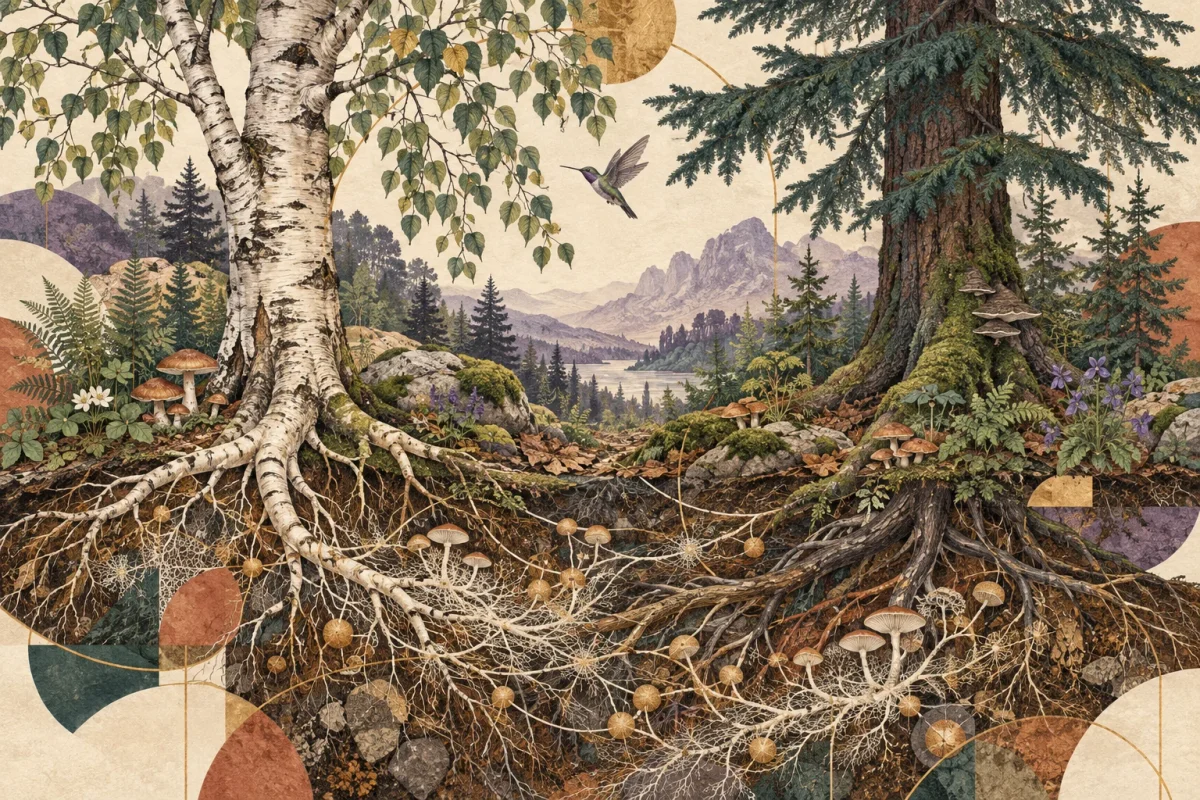
The experience of a place changes even when we decide to see it again. The light passes, the leaves move, our mood participates in the meeting. The same tree can look different without needing to become an exceptional place.
Claude Monet worked repeatedly on the pond and water lilies of Giverny's garden. La National Museum of Western Art, dedicated to a 1916 painting, links that research to variations in water surface, weather and time. Repetition becomes a chance to differentiate one's gaze.
From this artistic practice we can draw an invitation: to meet a particular several times without demanding that it confirm the initial impression. A photograph preserves an image; returning allows you to find out how much was left out of that image. Both gestures can find a place in attention, if we are present at the choice we make.
Beauty as a Public Relationship
In the parking lot scene contemplation becomes shared. People do not receive an explanation before they stop; they notice the gesture of others and continue it. The applause makes a common recognition visible, but leaves open the question of its meaning.
What are we celebrating: the tree, the light, the ability to be there, the meeting of strangers? The richness of the scene also depends on the possibility of different answers. A community can recognize something together without immediately reducing it to a slogan.
In real life the gesture could be much more discreet. Turn down the phone, wait for the person who is watching, let a conversation start with what is in front of us. Contemplation acquires a social dimension when the time of others enters ours.
The tree continues its cycle. We are the ones who take away a different question from the one we had arrived with: what presences do we go through every day without giving them enough time to become a meeting?