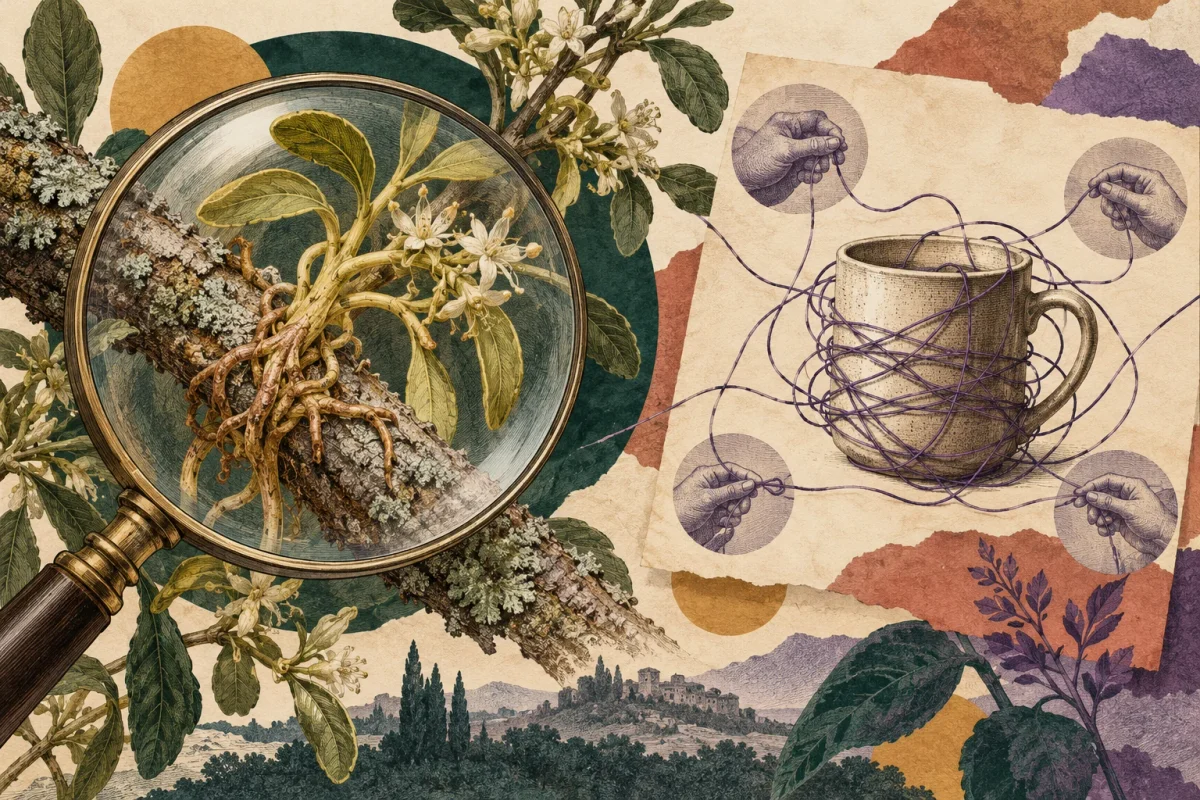
First of all, an organism
The word parasite has an immediate force: something lives at the expense of something else. This very ability to go through different areas makes it necessary to understand in what sense we are using it. An infection and an attention-exhausting environment can both be described as parasitic, but are not ascertained in the same way.
The Centers for Disease Control and Prevention defines parasites through their relationship with a host organism. They distinguish, among those capable of causing human diseases, protozoa, helminths and ectoparasites. They are living beings with different characteristics and cycles. CDC, introduction to parasites.
Biological data therefore requires specificity. Which organism is involved? Which location? Through what path is it transmitted? The investigation cannot stop at a general feeling of invasion, because different organisms produce different problems and signs.
The USDA describes the presence of parasites in food and water and illustrates differences in their life cycles. The link with the environment is concrete: distribution of resources, hygienic conditions and food controls participate in the picture. USDA, parasites and food diseases.
The image moves to communication
When we call a communication parasitic, we are using a metaphor. It can be effective: it describes a relationship in which attention, data, or time are absorbed without a recognizable benefit to the offerer. The word becomes useful if it helps us to show the mechanism.
We think of a question addressed to the audience that seems to be listening and produces above all information to be exploited elsewhere. The survey should reconstruct who collects the data, for what purpose and with what choice. These elements can be observed without imagining an organism in the body.
The same goes for a relationship that leaves a person constantly exhausted. We can describe demands, pressures, reciprocity, and limits. Calling the other one a parasite risks instead fixing it in an essence, replacing the reconstruction of the acts with a label.
The metaphor retains value when it remains correctable. If a relationship changes, we need to be able to change the description as well. Otherwise the name becomes a way to no longer see what happens and to justify any response to whom we have classified.
The Border of the Invisible
In spiritual discourse, presences or forces described as parasitic may appear. These stories deserve to be understood in their language: what experiences do they name, what tradition do they belong to, what practices or interpretations do they propose? Biological analogy does not constitute a demonstration of this.
If a person reports an intense feeling, we can listen to it without immediately concluding that a unique explanation is certain. Respect for experience includes the possibility to explore contexts, body conditions, emotions and meanings, keeping different perspectives accessible.
It is equally important to avoid the reverse passage: the real existence of parasites does not prove that any discomfort depends on them. A category capable of explaining everything stops distinguishing situations. Biological research works precisely because it identifies differences, conditions and limits.
Social criticism also gains from this precision. Instead of imagining a world made up of innocent hosts and absolute invaders, we can examine how a system distributes costs and advantages. Who gets something, who decides, and who can get away?
The most powerful words need contours. Separating organism, metaphor and spiritual interpretation allows one to investigate each field without losing others, and without confusing an eloquent figure with a diagnosis.