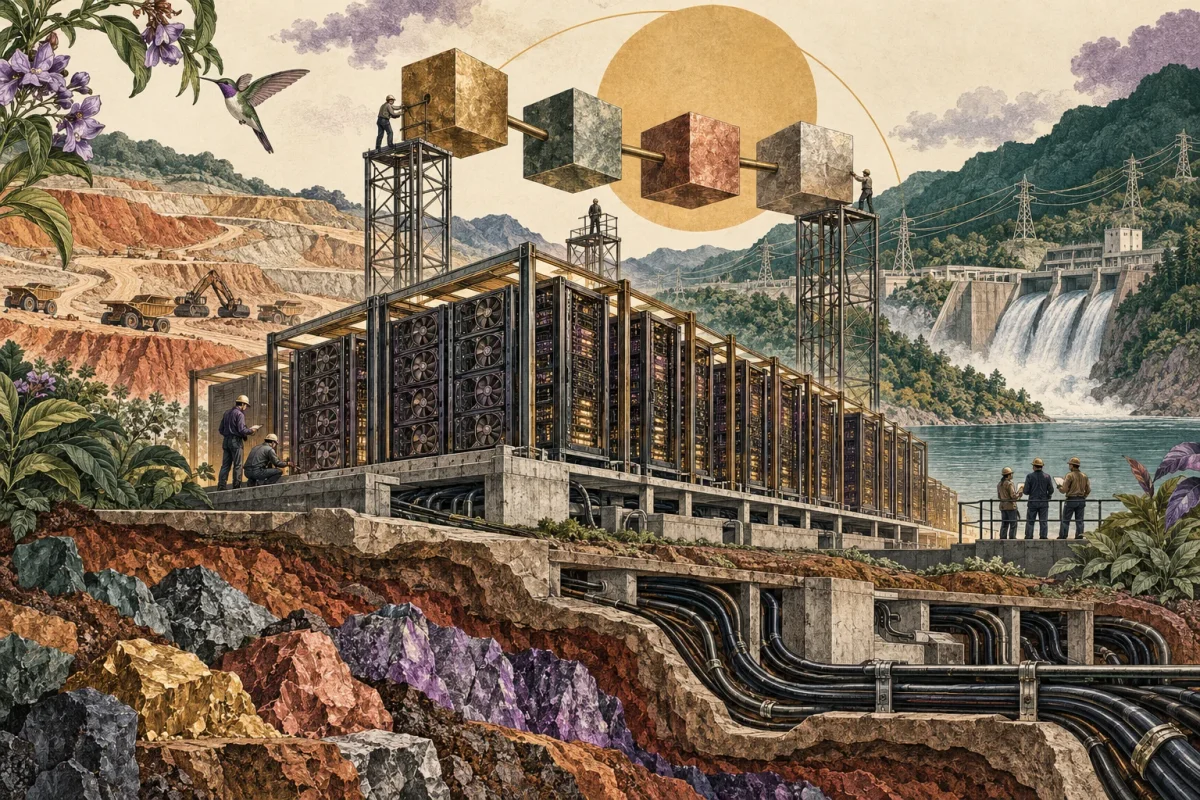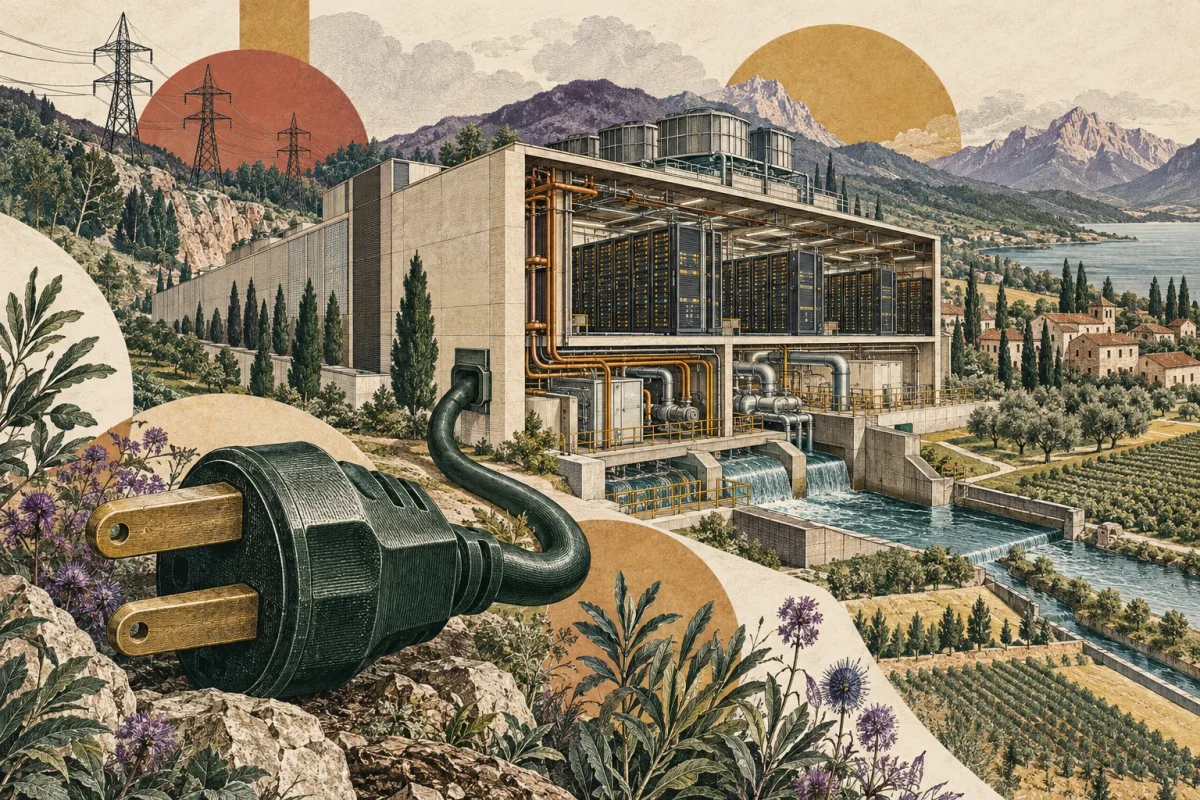
An answer appears on the screen and seems to weigh nothing. There's no package coming in, there's no engine going on in front of us, we don't see a chimney. It is this absence of friction that makes an elementary question difficult: where does the artificial intelligence we use materially happen?
It happens in processors, in the buildings that house them, in heat-dispersing plants, in networks that carry electricity and data. The cultural dimension of AI includes this infrastructure. To question it means to link the desire for immediate responses to the physical conditions that make it possible, without reducing each application to a fault or promise of salvation.
The number to be read with its perimeter
The Report Energy and AI of the International Energy Agency estimated for 2024 about 415 terawatt hours of electricity consumption of the world's data centers, or about 1.5% of global electricity. Data concerns the whole of data centers, not just generative AI. Confusing these perimeters produces an impressive title and a worse understanding. Growth prospects depend on investment, efficiency, service deployment, and network constraints. IEA, Energy Demand of AI.
Estimates are not universal meters linked to each request. Training a model and using it are different tasks; system size, response length, hardware, and service organization change the work needed. There is therefore no immutable amount of energy attributable to any question, regardless of where and how it is processed.
This limit does not prevent asking for transparency. On the contrary, it makes it more interesting to know the method of measurement, the observed period and the activities included. A service can become more efficient for single use and consume more overall if it is used much more often. The individual convenience and budget of the system do not automatically coincide.
Water and territory enter the conversation
The Lawrence Berkeley National Laboratory built its 2024 U.S. report by combining historical data, equipment models, and future scenarios. Research also considers water and the effects of electrical production. It thus distinguishes what is used directly at sites from the footprint connected to the energy that powers them. It is not a transferable measure without adaptations to each country. LBNL Report.
For a local community, it counts where a plant is located, what resources it requires, what benefits it offers, and who decides. Modest consumption on the national average can be significant for a specific network or basin. Similarly, a figure on water loses meaning if it does not distinguish withdrawal, return and actual consumption.
It is therefore not enough to choose between technological enthusiasm and rejection. A public discussion is needed to make the trade-offs visible: supply, network capacity, cooling, the possibility of recovering heat, responsibility for commitments made. The word innovation gains weight when it includes people living close to its infrastructure.
Deciding What Answers Are Worth Their Matters
The spiritual question can be very concrete: what need are we feeding? An elaboration that helps a search, improves accessibility or reduces a strenuous task has a recognizable purpose. The endless production of content intended to submerge other content deserves a different discussion. The value is not read only by the number of requests.
We can design tools that make it easy to choose proportionate answers, avoid repetitive processing, and recognize when an already available search is enough. It is not necessary to turn every gesture into an impossible moral calculation. Those who build systems need to take on a greater share of responsibility: comparable measures, understandable technical choices, verifiable objectives.
Technological consciousness begins when the screen ceases to be the last boundary of our gaze. Behind a digital phrase are work, metals, energy and inhabited places. Recognizing them allows us to discuss what intelligence we want to grow and under what collective conditions.