An underground kingdom, a guarded wisdom, a center that continues to act while the surface seems to have forgotten it. Agartha crosses the imagination as a promise: the visible world may not exhaust what exists. The charm of this possibility deserves an investigation capable of following the sources and also questioning our desire for another.
Among the texts that have given modern form to this research, René Guénon's King of the World occupies a precise place. Facing it means encountering a metaphysical and symbolic construction, along with the stories from which it starts. The depth of the question requires attention to the meaning of the words and the kind of knowledge that each document can offer.
The Kingdom That Becomes a Reading Problem
The work was released in 1927; the digital library of the Classiques des sciences sociales makes available a 1958 Gallimard reissue. In the first chapter Guénon relates Mission de l'Inde by Saint-Yves d'Alveydre and Beasts, men and gods by Ferdinand Ossendowski. He observes correspondences between accounts of Agarttha and of underground communications. He also specified that Ossendowski reports some statements to interlocutors he met, without assuming them all as direct knowledge. Guénon, text of the work, chapter I.
This distinction offers a still useful method of reading: following who tells, what he claims to have observed and what he has received from others. A story can be important in the history of an idea even when it does not document a place that can be visited. To understand its strength we must preserve the plot of the transmission, without transforming each passage into an independent feedback.
The presentation of the Italian edition Adelphi recalls the comparative path between traditions: Agartha, Melchizedek, Grail, Atlantis and other images are brought together around the primordial Tradition. It is the interpretive perspective through which the work organizes materials. Adelphi, The King of the World.
The center and the surface
In the second chapter the title King of the World is referred, in its highest meaning, to Manu as a cosmic principle and intelligence. Guénon contemplates an earthly spiritual center charged with guarding tradition; in the text there is also a reservation against the geographical location taken literally. The subject therefore moves on several planes, which a careful reading must keep recognizable. Guénon, Chapter II and note to Chapter I.
We can develop, from these images, a question of our own: what do we call a center when the present appears dispersed? It could be a criterion of orientation, a relationship between knowledge and responsibility, a space of silence. This is a reading proposed in comparison, not the pretense of exhausting Guénon's thought.
Even the image of the basement can question us. What remains hidden is searched for because it seems preserved by noise and distraction. But the desire for depth can accompany us in different directions: to study patiently or to ask a story to immediately confirm what we desire. Recognizing such tension belongs to the research itself.
When the Question Is About the Physical Earth
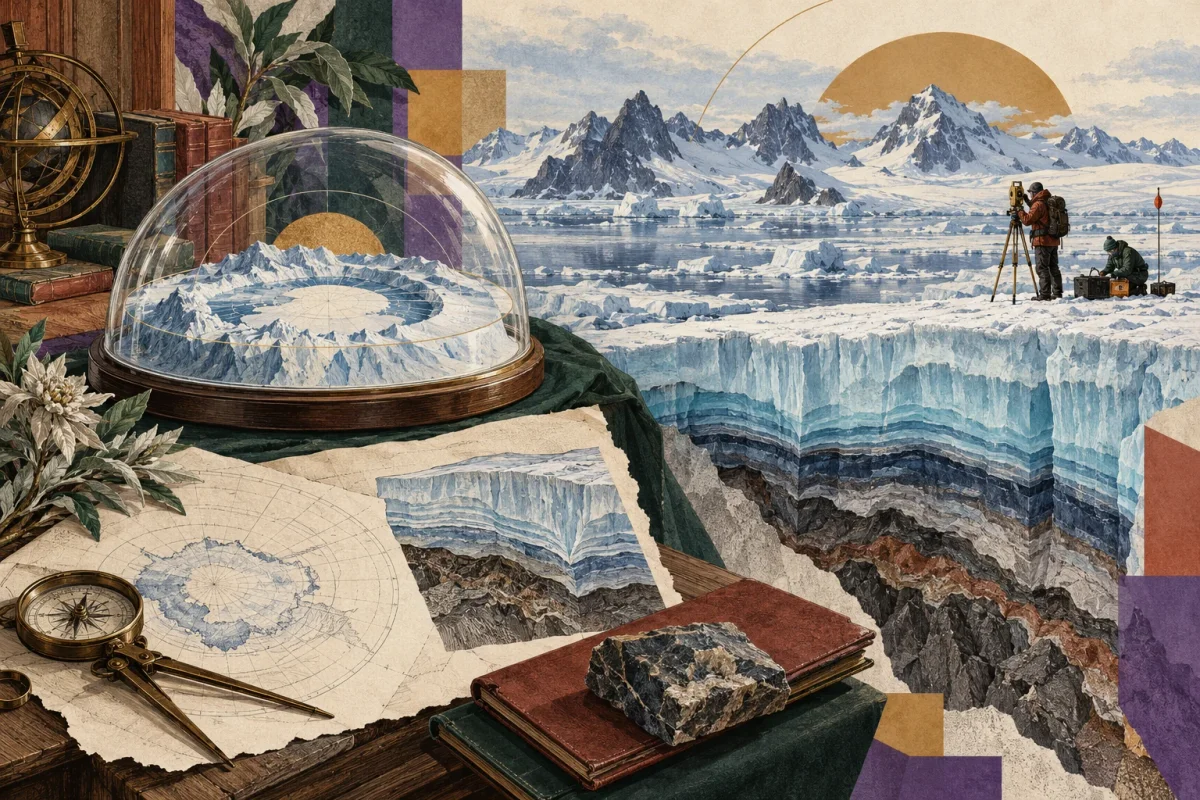
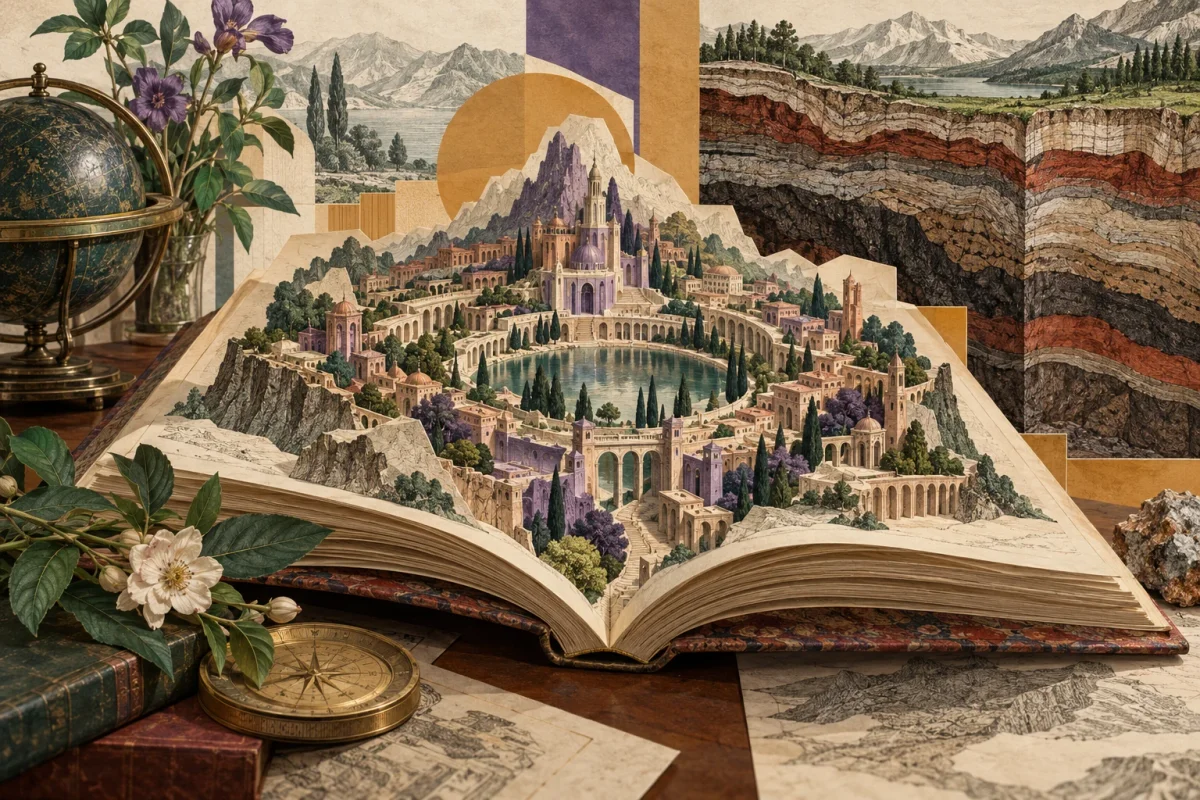
The theory of an inhabited Inner Earth takes a further step: it presents the image as a material description of the planet. This statement requires geological and geophysical evidence. The British Geological Survey explains how travel times, refraction, and seismic wave behavior allow a layered structure of the Earth to be reconstructed, with crust, mantle, and core. The behavior of the waves also helps to distinguish the liquid outer core. British Geological Survey, Earth Structure.
A large habitable planetary space is not documented by these observations. To support it as a physical hypothesis it would be necessary to explain what measures indicate it and how they accord with those available. The presence of a place in a tradition does not, by itself, produce this kind of demonstration.
It remains a space of rich exploration: comparing texts, questioning the symbol of the center, studying how a narrative changes passing between cultures and readers. We can keep the question about the unknown open without attributing documents to it that we do not yet possess. The search for an inner world then also becomes an exercise in awareness: recognizing the value of an image and observing precisely what we are asking it to reveal.