A spiral can be a drawing, the shape of a shell or the image of an inner journey. The trait on paper looks the same; it changes the relationship we build with it. The symbol begins to work when a figure sets in motion more than it shows.
Hummingbirds, Nautilus, and ouroboros recur in the imaginative lexicon of communication and spiritual research. They can accompany the idea of a message, a growth or a regeneration. To understand them it is better to stop before the label: where does the image come from? What aspect of its form are we choosing to listen to?
The Shell Before the Metaphor
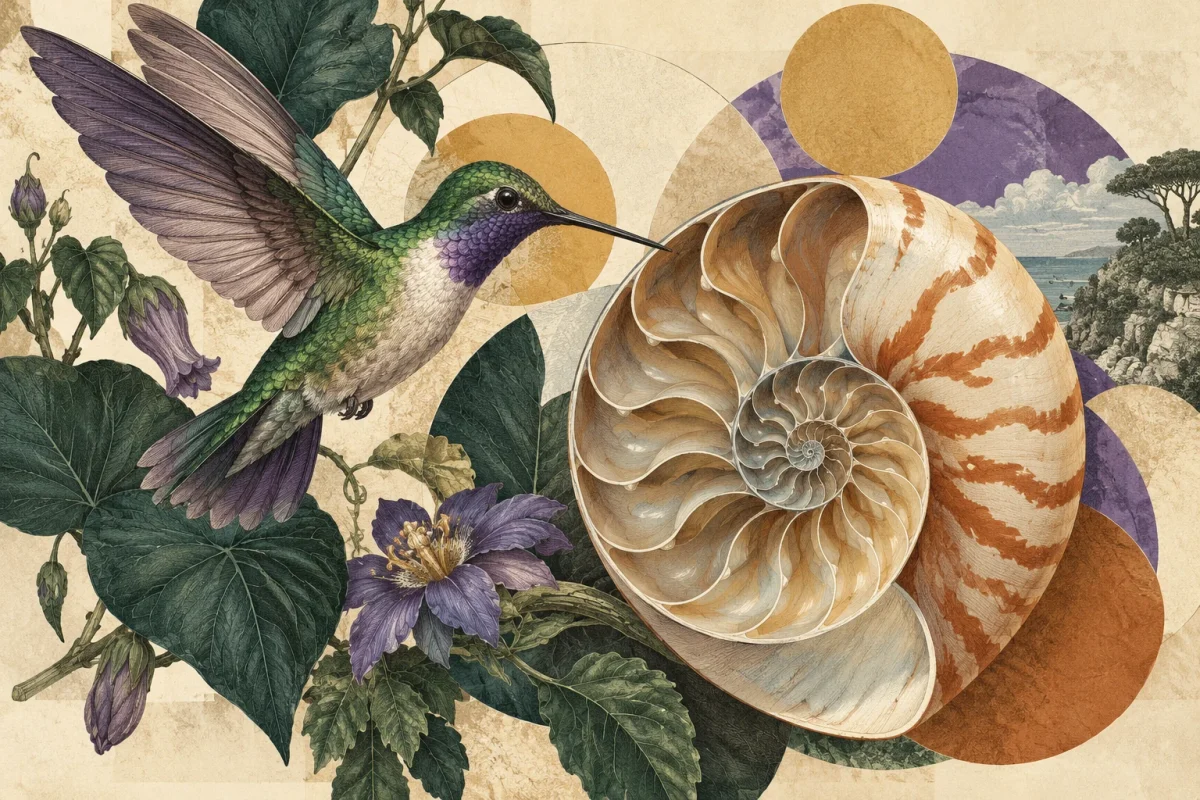
Nautilus is a cephalopod mollusk that lives in a shell divided into chambers. NOAA describes how these structures participate in buoyancy control: the animal inhabits the main chamber and regulates the fluids in the others through a tissue that connects them. The form therefore has a biological history and a concrete function.
Symbolic reading can start from this very detail. A growth that preserves the trace of previous chambers offers a powerful image of the relationship between transformation and memory. The new possibility does not erase the entire structure that made it accessible. This is an interpretation of form: it acquires clarity when we recognize the transition from description to human demand.
The spiral also recalls the return. We go back to a matter and realize that we are at a different point. A reread book, a meeting resumed after years, a word that changes meaning: experience can grow without following a straight line. The shell becomes an interlocutor of the imagination because it allows to make this possibility visible.
The circle that regenerates
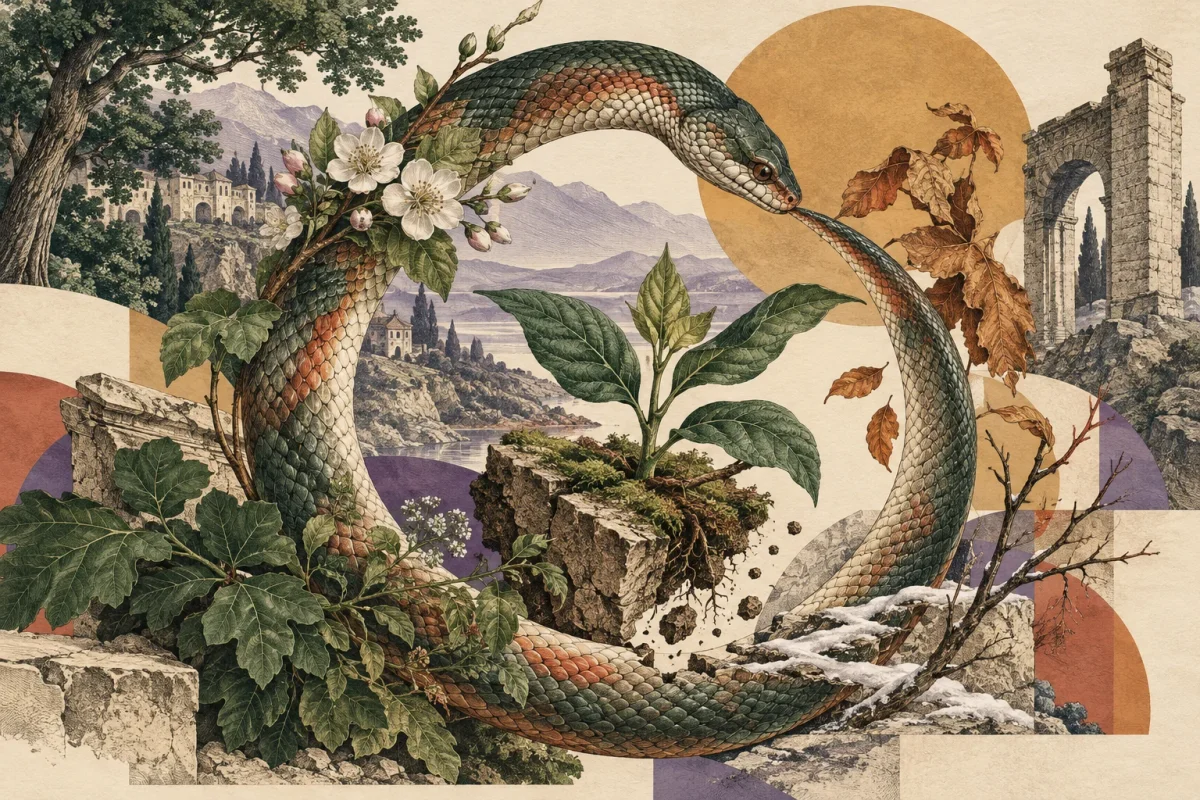
The uroboro represents a snake biting its tail, closing in a circle. The British Museum catalogues it as an emblem of eternity and collects objects from different periods associated with the motif. The catalogue allows to meet concrete uses and materials, instead of attributing to each apparition an immutable meaning.
A 1994 drawing by Peter Randall-Page, preparatory for a sculpture, shows how a figure can continue to be reinterpreted. Historical reference and contemporary creation dialogue without coinciding. Each new work chooses a problem, a material and a form of presence in space.
We can read the circle of the uroboro as continuity, closure, nourishment or regeneration. But a cycle can sustain life or hold in a repetition. The question changes: what comes back? What is transformed at each step? A symbol becomes interesting when it also allows a tension, not just a reassurance.
The Little Messenger
In the hummingbird we can recognize lightness, precision and movement. The image of a messenger appearing and walking away lends itself to a newspaper: a presence that invites attention without occupying the entire field. It is a poetic choice, which deserves to remain recognizable as such.
The animal does not carry a universal meaning written on its wings. Traditions and imaginaries can attribute different roles to it; an editorial use must clarify the context when recalling a specific culture. Creative freedom is accompanied by curiosity about what the image meant before our meeting.
The measure also counts. A symbol repeated everywhere can become a decoration that we stop seeing. A more discreet presence can instead accompany a passage, indicate a connection or leave room for the text. Its strength depends on the relationship with what is happening.
An image that keeps asking
Reading a symbol requires two attentions. One follows history: works, objects, contexts and transformations. The other observes the present experience: what strikes us, what associations emerge, what possibilities that form opens up. Neither exhausts the other.
This meeting can become a more conscious communication practice. Before choosing an image to represent an idea, we can ask ourselves what relationship we are building. Are we helping to see, raising a question, or using the prestige of a figure to avoid an explanation?
The hummingbird can pass, the spiral can widen, the circle can return to its beginning. The work of meaning continues in the way we look at it. A figure remains alive when it allows us to return even to what we thought we had already understood.